
Two for one. Painting reflections
Soft reflections wet-in-wet
Last week we painted waves for energy and movement in seascapes. This week we’re staying with water subjects, but without the movement.
We've touched on reflections before, back in September we covered 3 methods with a simple exercise. If you missed it, here it is.
Watercolour seems made for painting reflections on still water. And reflections give us two-for-one paintings, mirroring trees, boats, clouds, just about anything above the waterline.
Reflections are simpler than they look. Two rules cover most of what you need to know.
The mirror rule: a reflection is an exact vertical flip of whatever sits above the waterline. The angle doesn’t change, it just flips down.
The value rule: dark objects reflect lighter, light objects reflect darker. The water always softens what it mirrors.
Let’s apply both in a scene of reflected trees.
Exercise
As always, a step-by-step video is below in the premium section, as well as the reference photo.
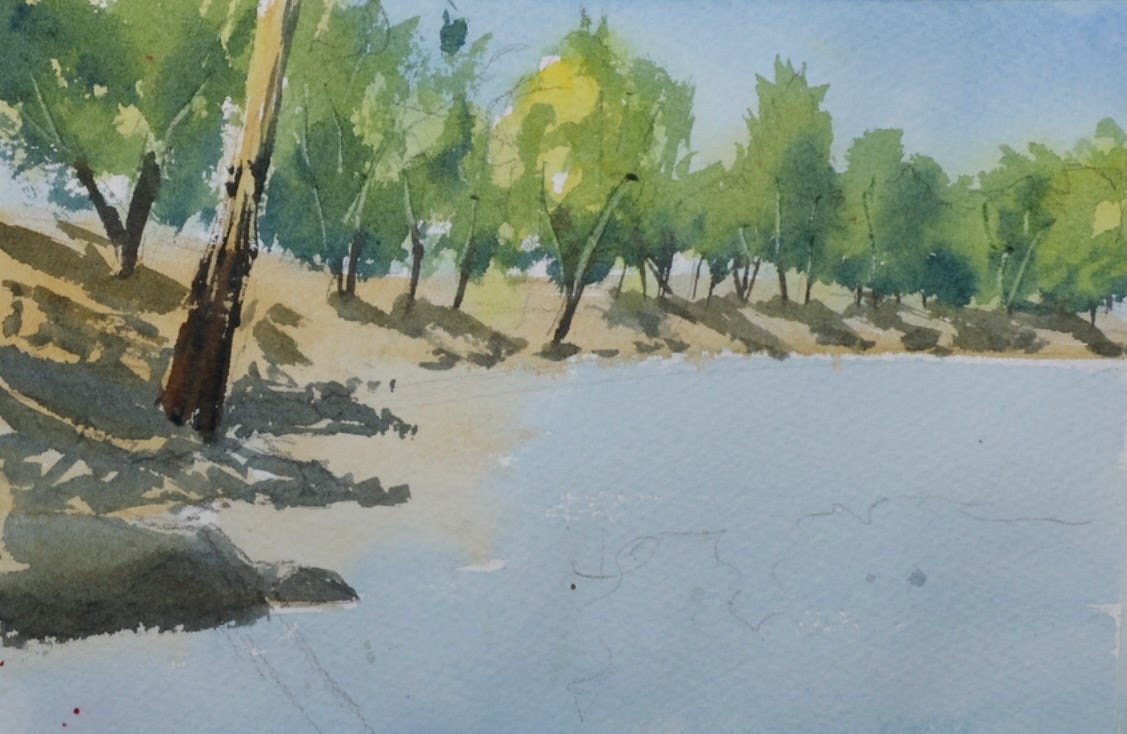
After loosely sketching the scene, lay down a light wash for the sky and the river bank. Drop in a little yellow where the trees will go.
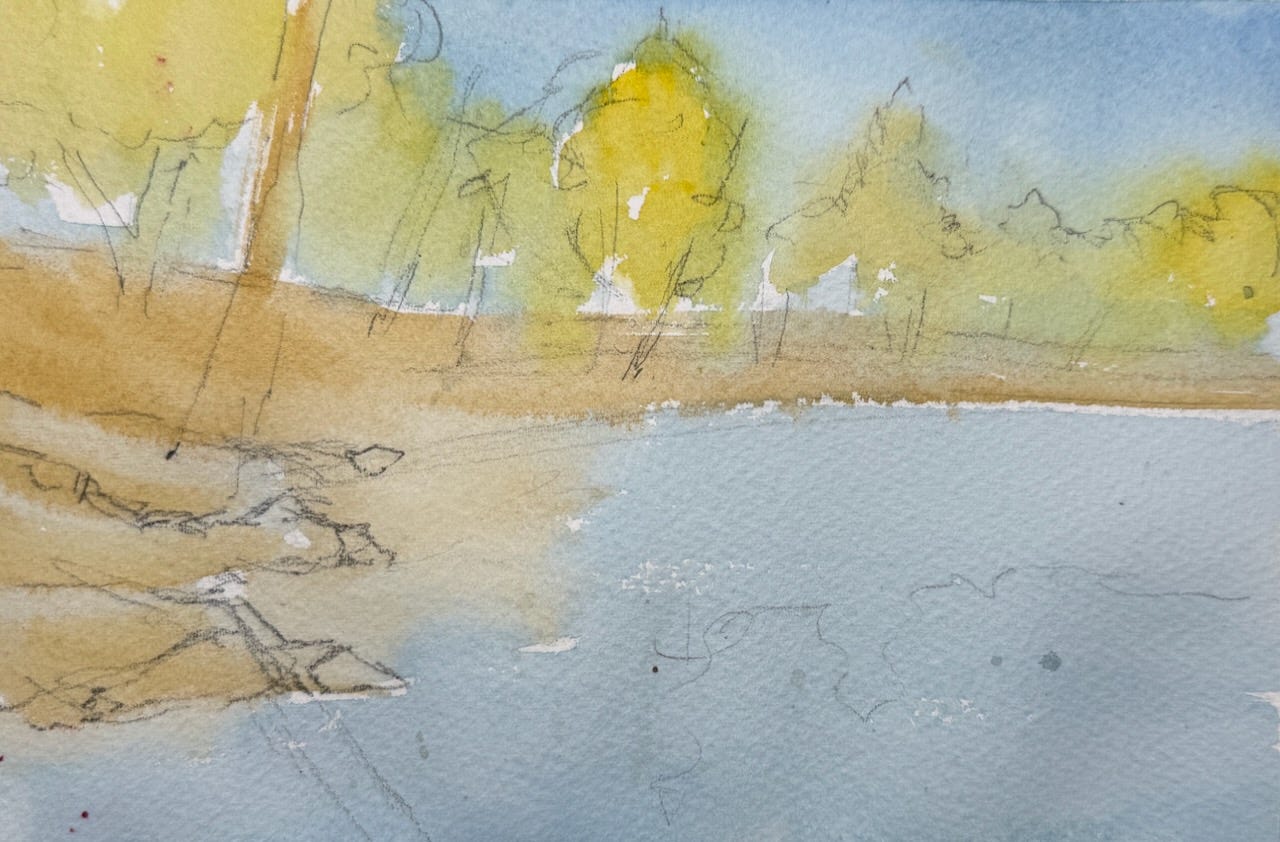
First wash Once dry, paint the scene above the waterline. All the trees, trunks and rocks, wet-into-wet, dropping darker shadow colours into the wet paint. Scratch out the white tree trunks while still damp.
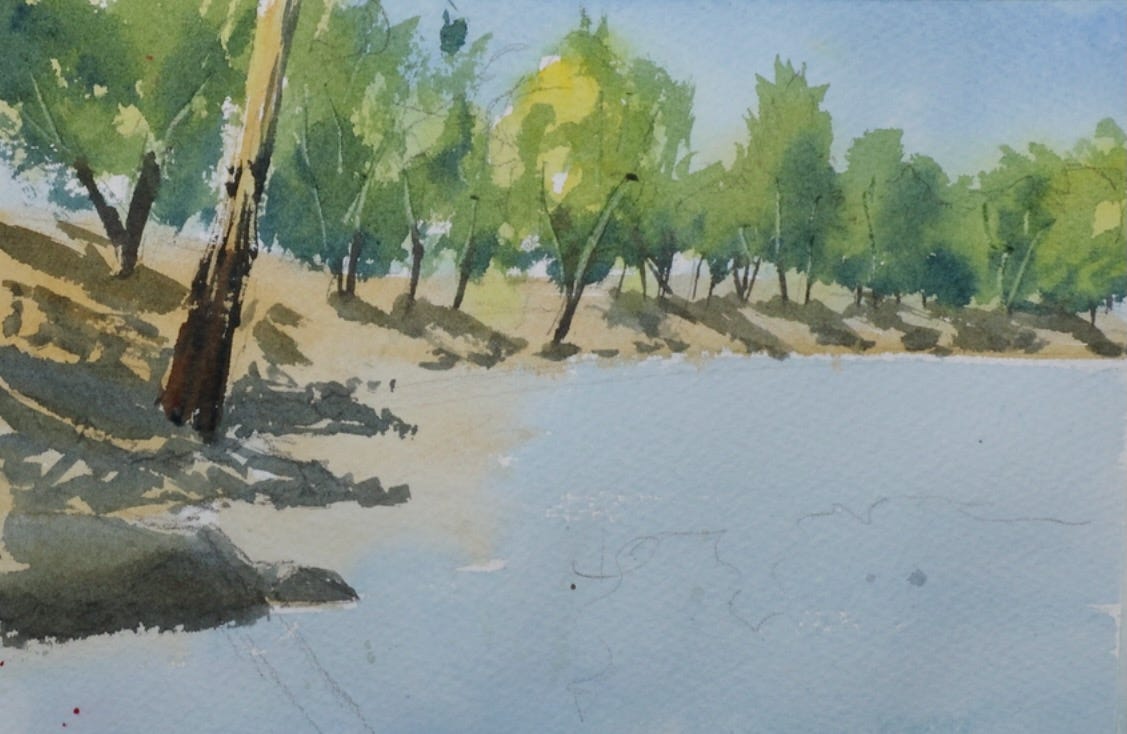
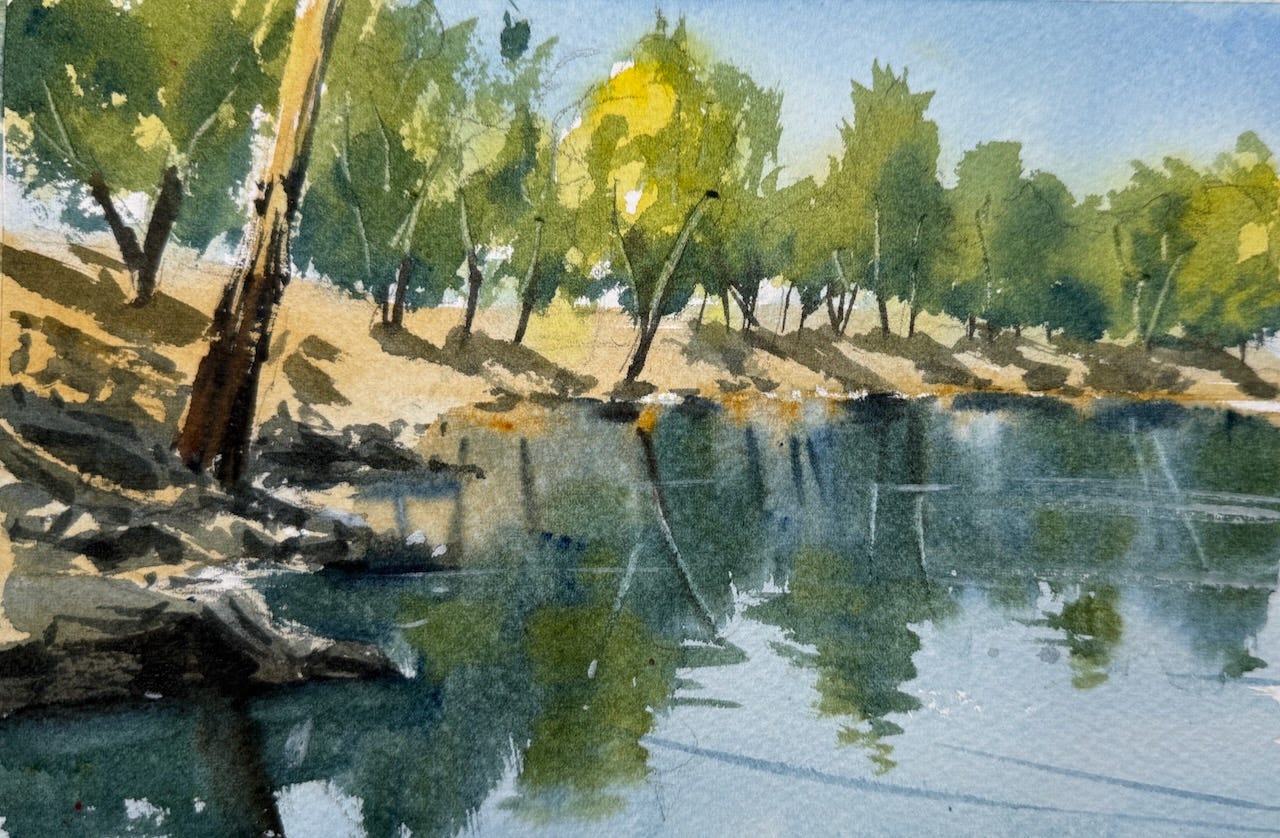
Paint everything above the water Let this dry completely. Only once you know what’s above can you paint what’s below. Rewet the river area with clean water, then mirror the tree shapes using a darker, cooler mix, more blue than green.
Drop in some brighter colours to match the highlights above. Mirror the tree trunks with a thick dark mix, reversing the angles. As the paper loses some of its wetness, scratch out the reflected trunks.Once the river is dry, add a few shadows to the rocks and a few strokes of opaque white for ripples. This is what makes the surface read as water.he rocks, and some white ripples with opaque white, this helps to make it look like a water surface.
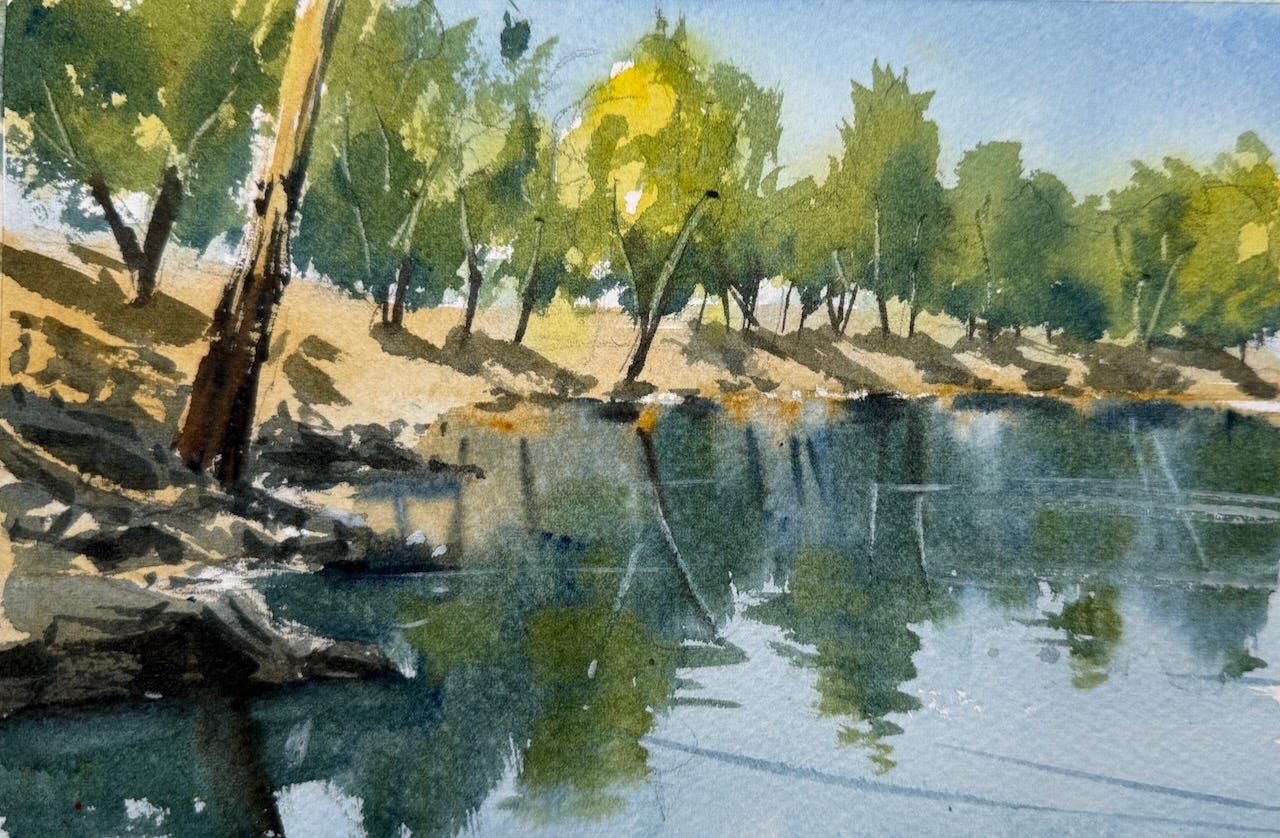
Lastly the reflections
Why
Reflections force you to look harder at values
Painting “as above, so below” builds compositional symmetry instincts
Still water is a forgiving subject for practising wet-into-wet
Understanding the mirror rule transfers to any reflective surface, glass, wet streets, puddles
In the premium section:
Video demo of the exercise with reference photo
Master artist spotlight
Further ideas to practice reflections
