
Think inside the box
Using Off-Cuts and Odd Shapes
You don’t always need a pristine piece of paper to paint something worthwhile. In fact, odd-shaped off-cuts, the backs of failed paintings, and the scraps you’ve been collecting are perfect for a powerful exercise in composition.
When designing a painting, the format—the shape and size of the paper or canvas—does a lot more than just hold your subject.
As Ian Roberts (a master of composition) puts it:
“The edges of your picture plane are the four most important lines in your composition since they, in the most basic sense, define the foundation you are starting with.”
Whether you’re painting a square, a long horizontal strip, or a tall vertical, each format brings its own constraints and opportunities.
Think how Polaroid and later Instagram popularised the square format and gave photos a distinct vibe.
American artist Richard Diebenkorn believed that format determines structure and even a small shift in proportion could completely alter the energy of a piece.
So, this week we’re going to explore just that.
The Exercise
What you’ll need:
Small pieces of watercolour paper in non-standard formats
(e.g. squares, skinny verticals, wide panoramas, or whatever scraps you have)One or more photo references (or draw/paint from life)
What to do:
Choose a different format for each piece
Paint a quick study for each format. Observe how the format affects your composition
Try using the same subject in two or more formats, and observe how your choices shift.
You don’t need detail or polish. Just block in the big shapes and aim for mood or movement. Use the edges of the paper deliberately—where you crop and how your shapes interact with the border is the whole point.
Why?
We often start without thinking about the shape of our paper. We just grab a sheet or sketchbook and use its predetermined size. But format is not neutral. It sets the stage. It suggests balance, movement, and where the eye will go.
A square can feel intimate. A wide rectangle might feel expansive, cinematic. Learning to adapt your composition to different formats builds design instincts that will show up in all your future work, even when you're back on a standard sheet.
Tip: On your next “real” painting use masking tape to change the format of your standard size paper. Make the paint area more square, tall or panoramic.
Examples
The idea for this post came from a series of small seascapes I painted on off-cuts. Instead of painting bookmarks I decided to create panoramas. You may have seen these in my notes earlier this week.
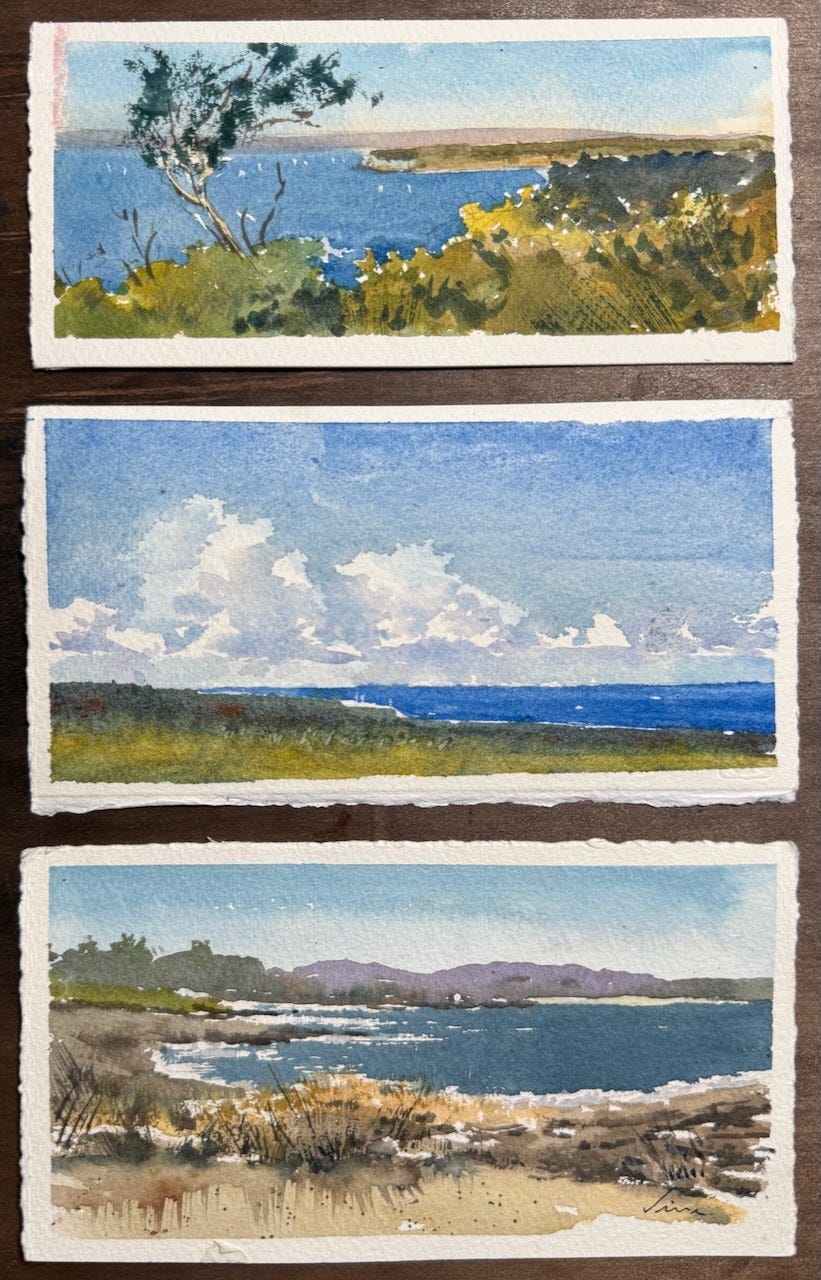
For this exercise I also encourage you to paint the same reference in different formats. And change up the colours and values while you’re at it. A series of quick paintings can help you design your final image before you commit to a larger size.
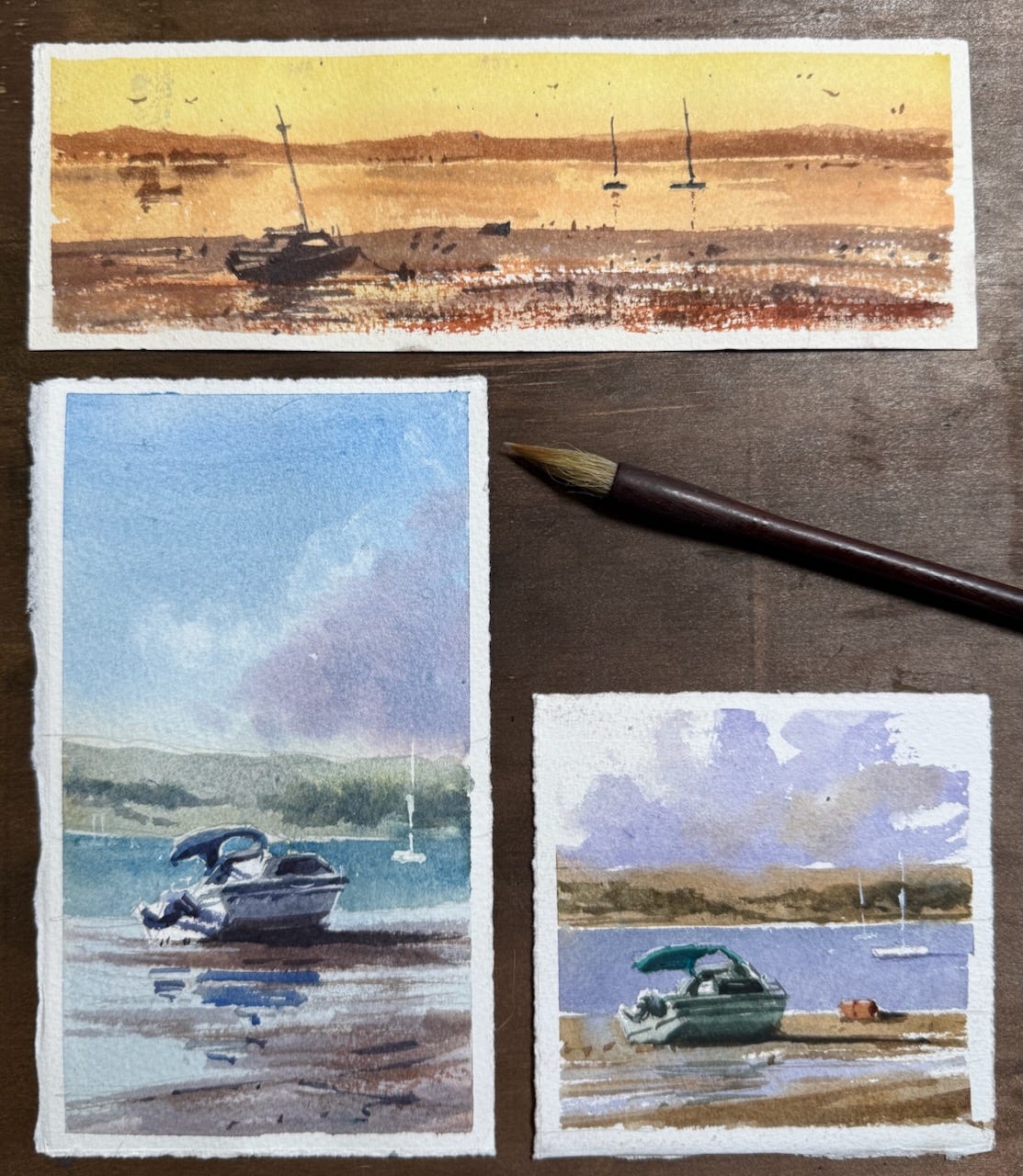
The video demos of all 3 are below in the paid section.
Shape it ’til you make it,
Patrick
You’re seeing only half of this post!
Upgrade to a paid membership to watch a video demo of the exercises with additional tips. Try premium for the price of one small tube of paint—cancel anytime.
This is excellent, premium content way beyond money, thank you - Mei
