
People Watching
Loose figures add life to a scene
You know those loose little figures you see in paintings of sun-drenched piazzas or rainy market streets? The ones that look like they were dashed off in seconds but somehow make the whole scene feel alive?
They’re the reason a painting tells a story instead of just describing a place.
Most beginners avoid painting people altogether. The subject feels too hard, too precise, too easy to get wrong. But here’s the thing: the best figures in watercolour aren’t drawn at all. They’re made from brush marks. A single confident stroke becomes a torso. A flick becomes a leg. A dot becomes a head. The less you try to “draw” a person, the more alive they look.
I first explored this idea when the newsletter was brand new, using random brush marks to discover figures hiding in the paint. It’s become one of my favourite warm-ups since. This week I’m revisiting it with two new brushes, a ½ inch flat and a calligraphy brush, and building the exercise out with a little scene.
This is about mark-making for figures. Every brush has a personality. It makes marks that are angular or flowing, blocky or delicate, depending on how you load it, hold it, and move it across the paper. When you know what marks your brush makes, you can suggest a walking figure, a seated couple, or a crowd of shoppers without ever trying to “draw” a person.
A torso is a mark. Legs are two quick strokes. A head is a dot. A ground shadow anchors the whole thing. That’s it.
Exercises
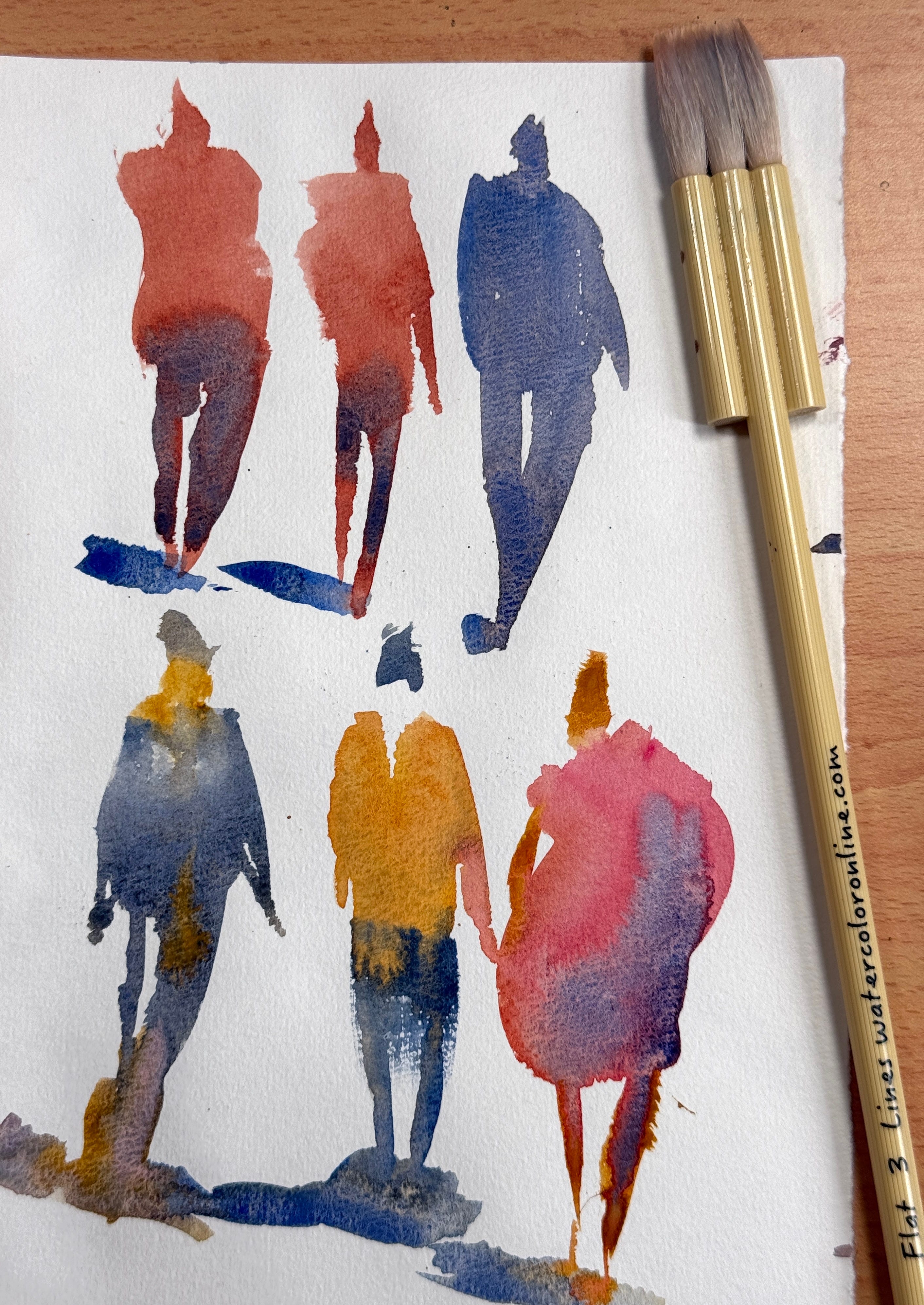
Exercise 1: Flat Brush Figures
Load a ½ inch flat (or any flat brush you have)
Make a random mark: drag, press, twist, pull sideways.
Using the same brush, add two strokes for legs beneath each mark. A dot for the head. A small shadow at the feet
Do a few more, this time thinking about the marks as you make them. Try to suggest different postures and outfits
Use different colours for the torso, head and legs
Exercise 2: Calligraphy Brush Figures
Switch to a calligraphy brush, or a round brush. My brush can go from a hairline to a broad stroke in a single movement, which makes it brilliant for expressive figures
Use light pressure for thin marks, press down for thick ones
A press-and-release stroke gives you a torso that tapers into legs. A light flick suggests an arm or the turn of a shoulder
Experiment with speed. Faster strokes feel more energetic. Slower ones feel more grounded
Compare your two sets of figures and notice the difference
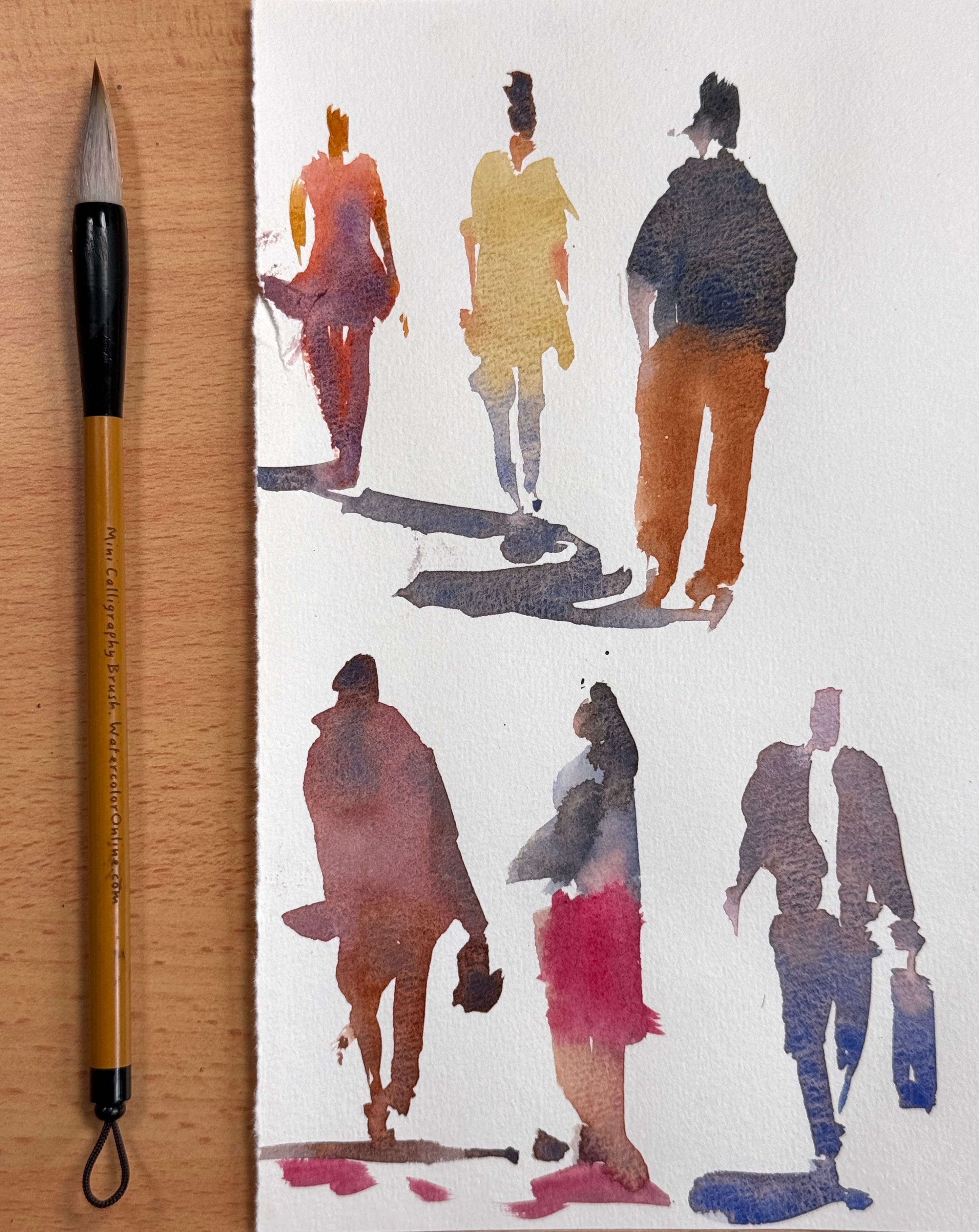
These figures are not about anatomical accuracy or realism. It’s a way to play freely with your brushes and loosen up your marks.
Why
Knowing your brush’s marks means you can suggest a figure in two or three strokes, no drawing required
Painting people is the single fastest way to add life, scale, and story to any scene
Different brushes create different figure “characters,” and choosing the right one changes the mood of your painting
The less you try to control a figure, the more natural it looks. This exercise trains that instinct
If you’re looking for a good book to practice figures I can recommend Trevor Waugh’s Paint 50 Watercolour Figures
Next up for premium subscribers:
Video tutorials of both exercises with commentary
Bonus video: placing simple figures into a street scene
Master artist spotlight
Ideas for taking this exercise further
If you’re not ready to upgrade to the full post, but you learned something from my Workouts, you can always send me a tip — it goes a long way.
