
One shape many colours
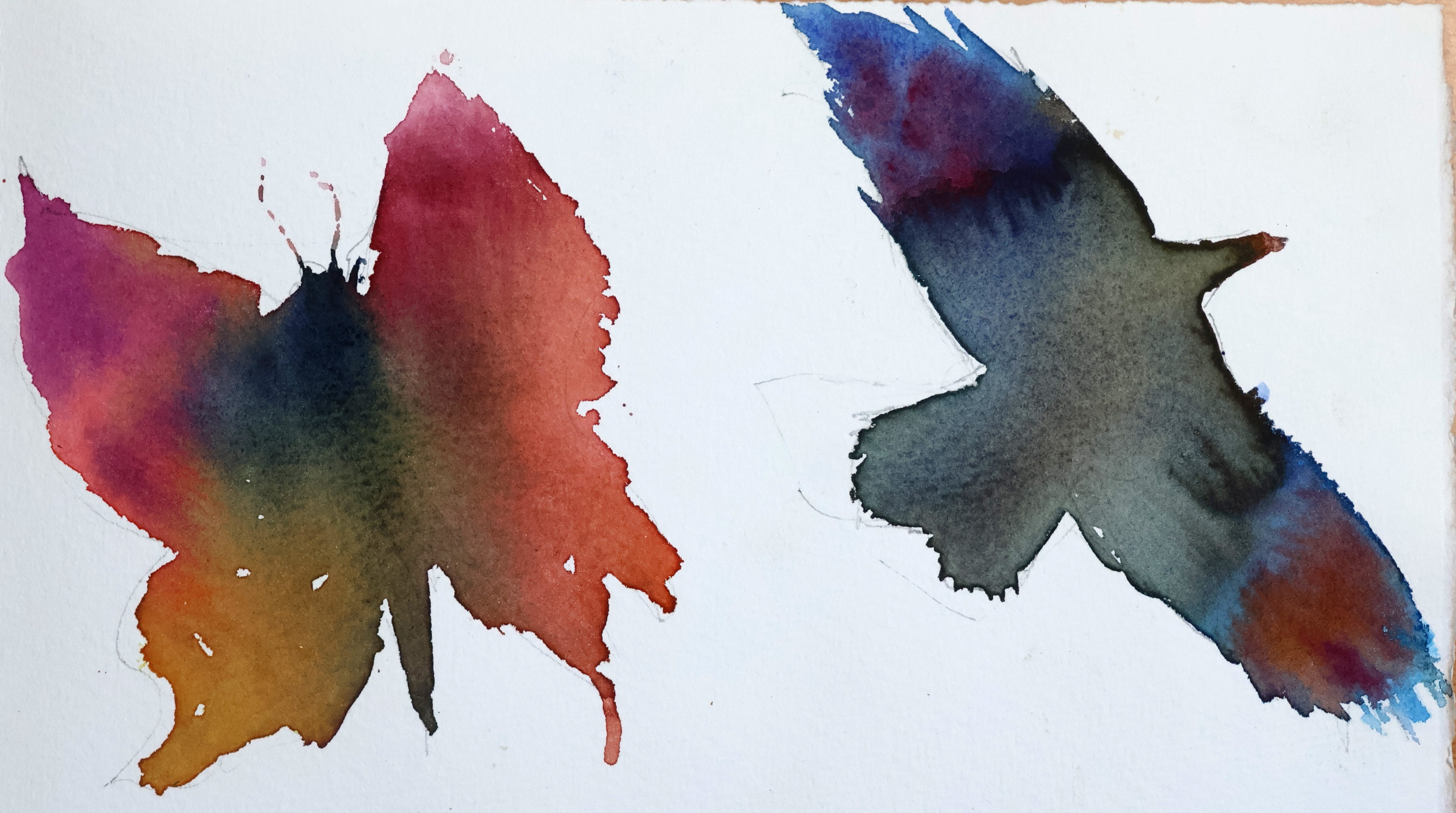
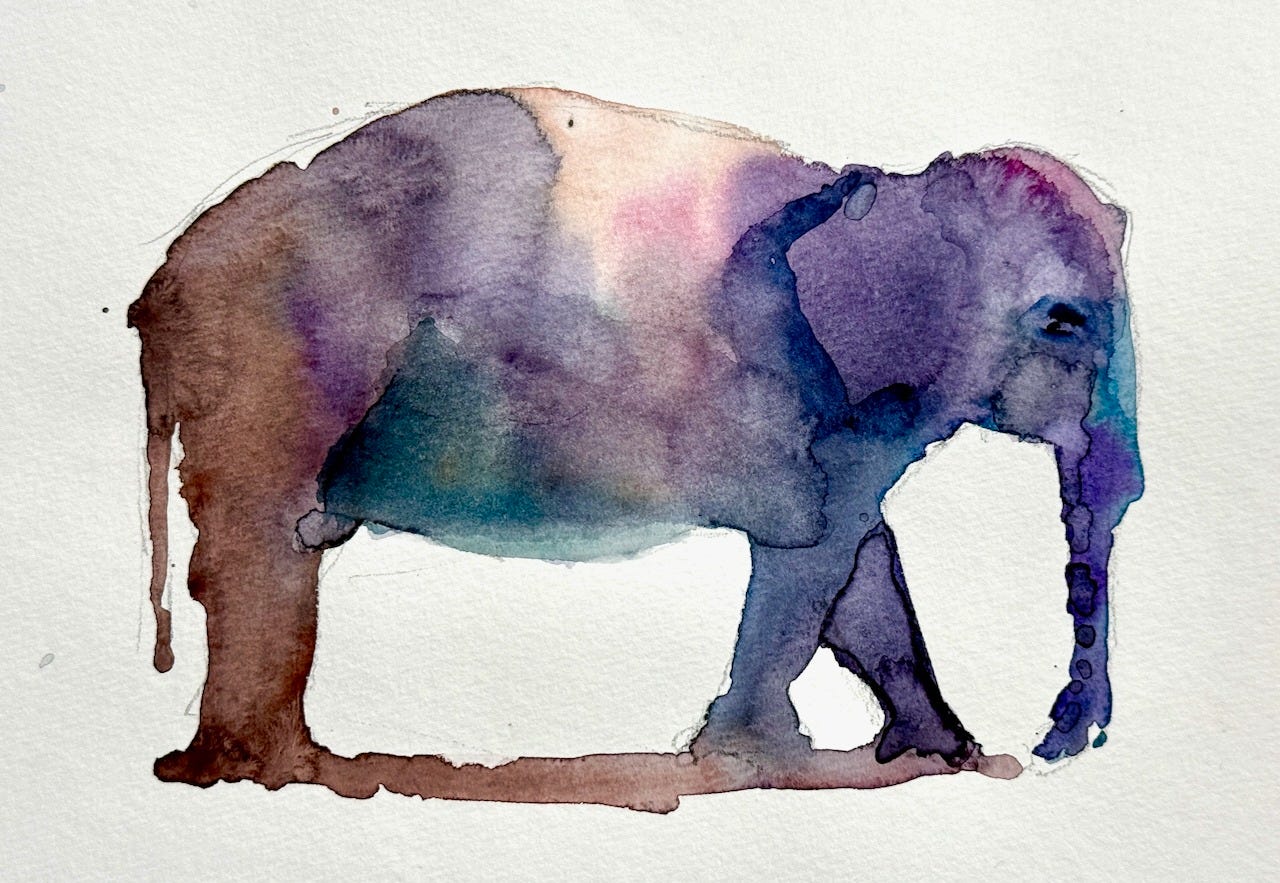
Blend colours inside big shapes
Watercolour has a reputation for being hard to control. The paint runs where it wants, colours bleed into each other, and the whole thing can feel like it is getting away from you.
But that runaway quality is the best thing the medium can do. The trick is knowing what to control and what to let go of.
This week we’re letting go. We draw one clear shape, and inside that shape we let the colours meet and merge on their own. You control the outline. The colours look after themselves.
It is a fun exercise you can finish in ten minutes, and it teaches the thing most of us find hardest: to place your colour, then leave it alone.
Look for strong shapes with a recognisable silhouette, like a bird from above, a leaf, an animal. What matters is that the outline is clear and the inside is open, with no little compartments to break up the flow.
In the premium section you’ll find a link with hundreds of outlines of objects, plants and animals.
Exercise
Work on good paper for these. Minimum 200gsm (74 lbs cover). Wet-in-wet needs paper that stays damp long enough for the colours to blend, and thinner paper dries too fast and buckles.
Sketch your shape lightly in pencil. Keep it simple and bigger is better here
Wet the inside of the whole shape with clean water, right up to the pencil line but not over it. It should be evenly damp, not pooling
Now drop in colours, as many as you want. Don’t aim for realism.
Tilt and angle the paper to move the paint around as you see fit
The hard part is knowing when to stop, make sure the you do before the paper starts drying in places, or you’ll get blooms
The colours will keep blending as they dry, and that is the whole point.
Why
A strong outline does the recognising for you, so the inside is free to be pure colour.
Letting colours meet on the paper, not in the palette, makes for beautiful transitions
Placing your colour and leaving it alone builds a useful wet-in-wet technique
In the premium section:
Video demo of the elephant
Link to online library with outlines
Master artist spotlight who paints free and loose animals
Ideas for taking this exercise further
