
IN ALL TRANSPARENCY
A guest post by Jessie Kanelos Weiner
A few weeks ago, Jessie (watercolour illustrator and author) kindly sent me a copy of her new book, Thinking in Watercolor. It’s a fantastic read, packed with useful exercises and watercolour wisdom. Perfectly in tune with my own belief in consistent practice and pushing creative boundaries.
She’s generously offered to give away 5 books, see below how to enter.
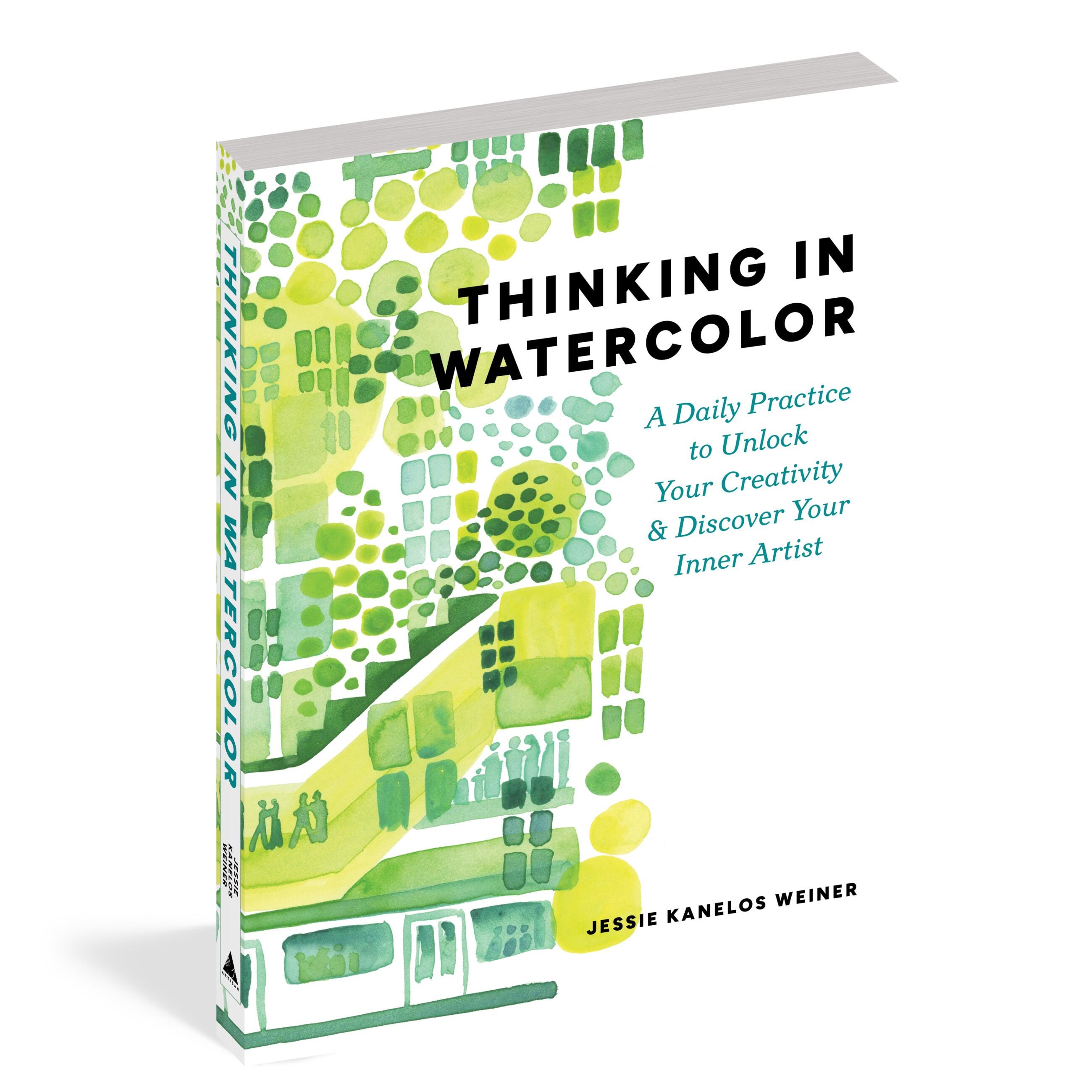
Today, I’m excited to share one of my favourite exercises1 from the book, in Jessie’s own words:
IN ALL TRANSPARENCY
I am always on the hunt to see watercolor paintings in museums and galleries because they are exceedingly rare, siloed more into the preparatory sketch phase before an artist starts painting in oil or acrylic. I was strolling through the Drawing Now Art Fair in Paris when I stumbled upon a watercolor, Black Watercolor (ref.607) 2014, by German sculptor and artist Joachim Bandau. At first glance, it looked almost like an X-ray of overlapping silk chiffon scarves. Taking a closer look, I realized that it was overlapping watercolor rectangles, meticulously layered until they morphed into a black hole that brought my eye into the center of the composition.
Painting things as you see them is a wonderful way to learn, but today we are going to try out something a little bit more abstract by overlapping layers of the same shape. The goals of this exercise are to build layers in a less literal way to develop a visual concept and approach color by layering transparency.
Step 1: BRAINSTORM
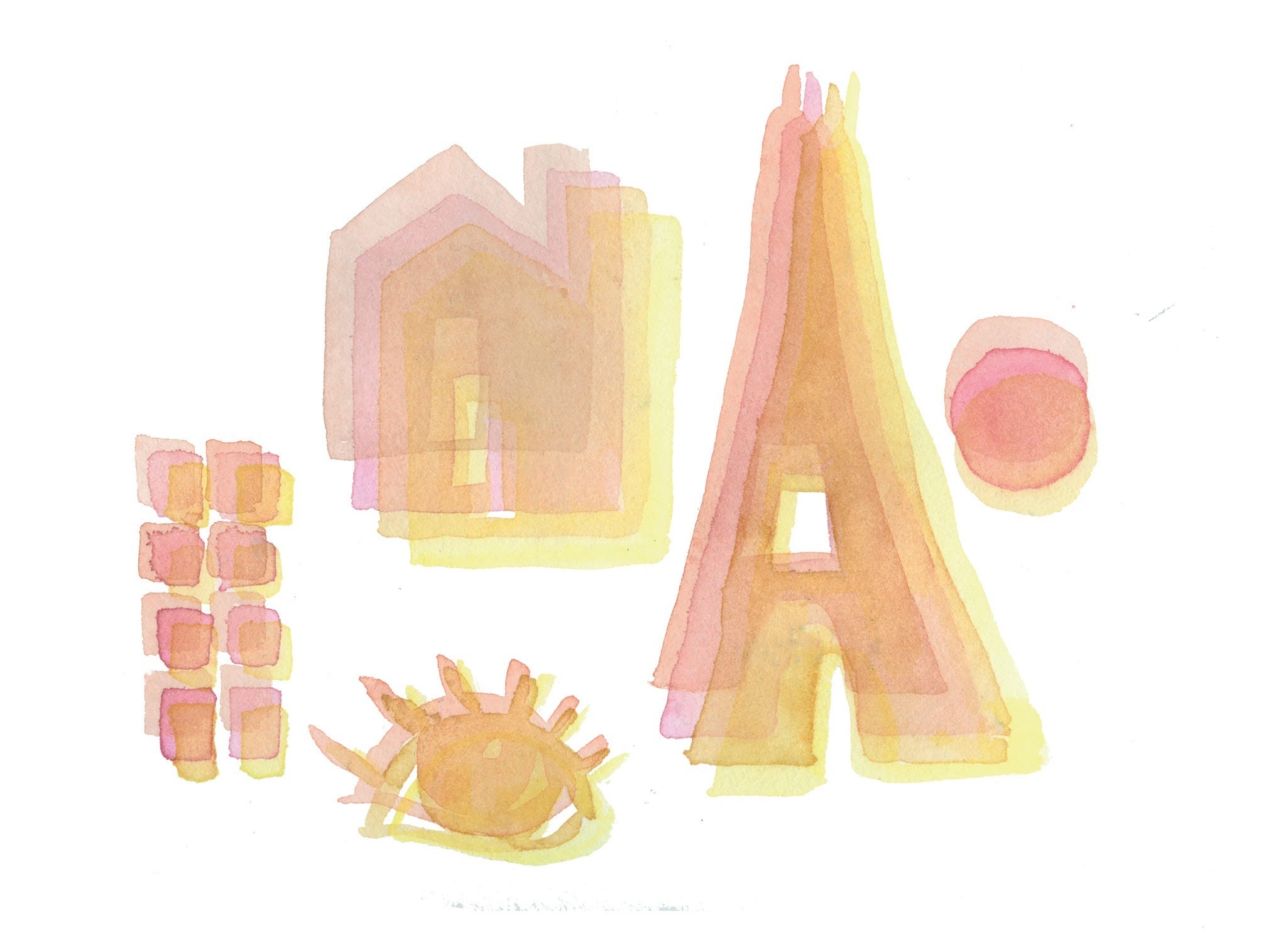
What I love about Bandau’s painting is the watercolor edge that is almost like a soft outline of the form. Find a shape or a symbol that you would like to overlap and repeat. It could be a geometric shape, a house—whatever comes to mind. Ask yourself how the overlapping will create depth in layering the color. I’m going to draw a loosely inspired silhouette of my head with an empty window to my mind.
Step 2: SKETCH
Lightly sketch out the shape, asking yourself how you will overlap it to create interest in your watercolor. Maybe you’ll arrange the shapes in a row, group them in some other fashion, or even create ever-smaller versions, one on top of the other.
Ask yourself how you can use color to create transitions. Do your layers go from lightest to darkest? I overlapped similar pink/orange hues, but feel free to use some of the principles of color theory described on pages 24–33 to play around with different combinations.
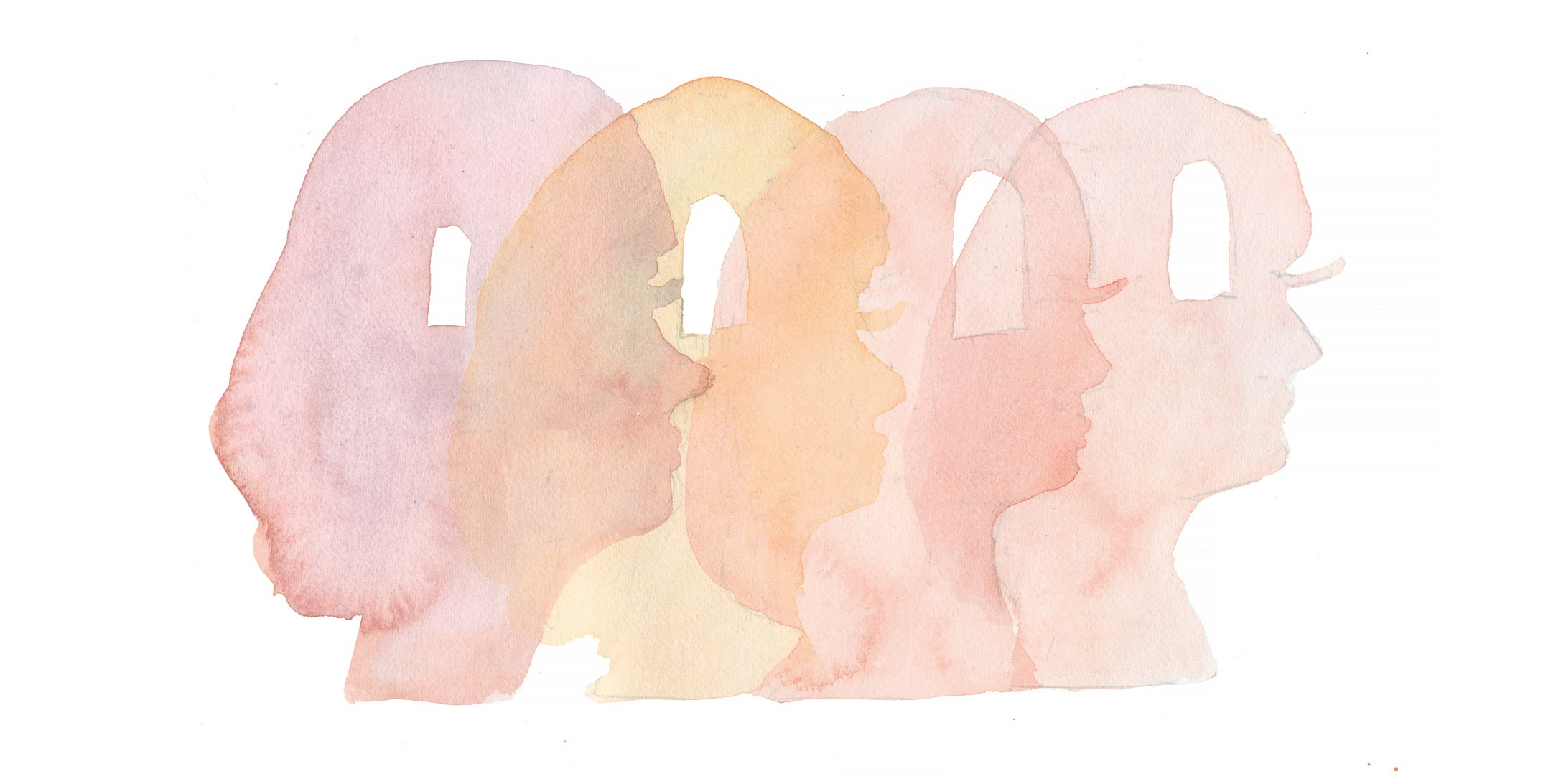
In the spirit of Joachim Bandau’s watercolor, it’s essential to keep the form as regular as possible to create harmony in the final painting. This test revealed that my heads don’t look consistent enough to be the same person, so I decided to sketch out my silhouette on paper and cut it out to create a template. I also decided that while I like that my sketch looks like I could thread a needle to connect the four heads, in my final watercolor, I want to overlap the head shape to draw attention to the window of my mind. I begin again, lightly tracing the first layer on watercolor paper and marking off the white space to create the window.
Step 3: PAINT
I mix a light pink wash and apply it to the surface of the first silhouette using a large round brush. You can see that when the pigment dries, it leaves a light line around the first silhouette. This is the ultimate game of patience, letting each layer dry completely before building the next, but I expedite the process with a hair dryer (see page 27).
I lightly sketch out the next layer using the template, mix a slightly darker shade of pink, and continue layering. I let each layer dry before adding the next, making sure not to paint the window shape, which will remain white.
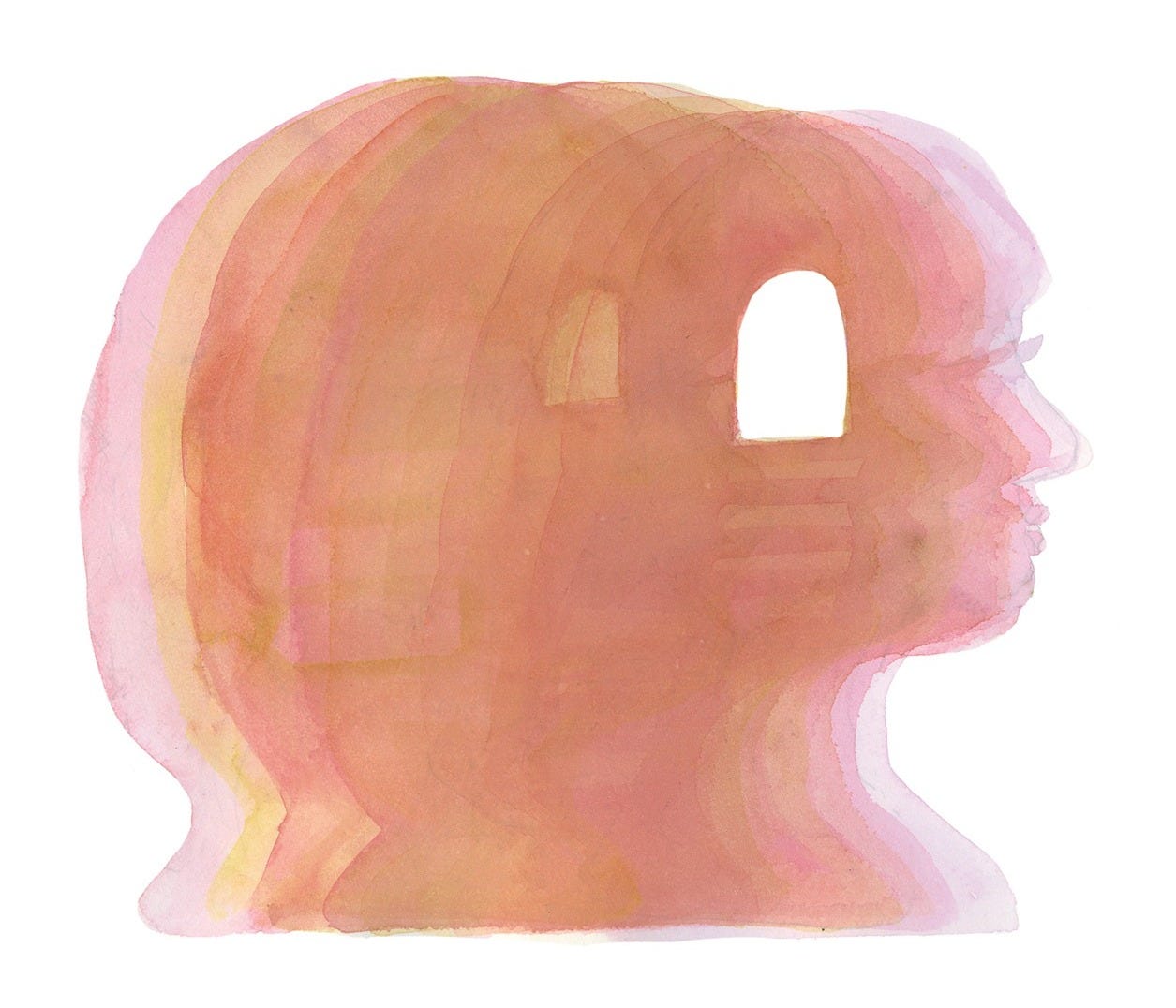
You’ll be surprised by how much nuance can be created by using a variety of washes and one simple shape—I add more yellow to some of the layers to add visual interest.
Step 4: REFLECT
This exercise helps you understand how layers of transparency can be used to create a form, with enough time and patience. Were you able to create distinct objects while also creating a harmony with the colors?
Book Give-Away:
To go into the draw to receive 1 of 5 books:
Be a subscriber
Like this post
Share this post
Entries close Thursday March 27, 2025, 8pm AEST. Winners will be announced in next week’s newsletter (March 28)
You can also order the book directly from the publisher’s site
In next week’s Watercolour Workout I’ll share some exercises to achieve better brush control.
To layering with confidence,
Patrick
Excerpted from Thinking In Watercolor by Jessie Kanelos Weiner (Artisan Books). Copyright © 2025. Art by Jessie Kanelos Weiner.
 | A guest post by
|
Very interesting exercise. Thank you.
Definitely want to try this - play with color and layering!