
Everything Round
Create form with gradient shadows
There’s probably a cylindrical object in your view right now. A mug, a pot on your windowsill, or a vase on a shelf. You walk past them every day without a second glance. But look more carefully at how the light falls across the side of that object, how it brightens on one curve, then quietly disappears into shadow.
And we have another very useful lesson in watercolour, similar to the one from a year ago to paint trees.
Once you understand how light wraps around a curved surface, you’ll paint all of them with the same confidence.
This week we start with what’s in your surroundings and end somewhere on the coast.
Exercises
The key insight with a cylinder is that the shadow isn't a hard edge; it's a gradual change. Light arrives on one side, the surface curves away, and the value shifts continuously from light to dark.
Watercolour, with its natural ability to blend, is the perfect tool for this.
Exercise 1: Value
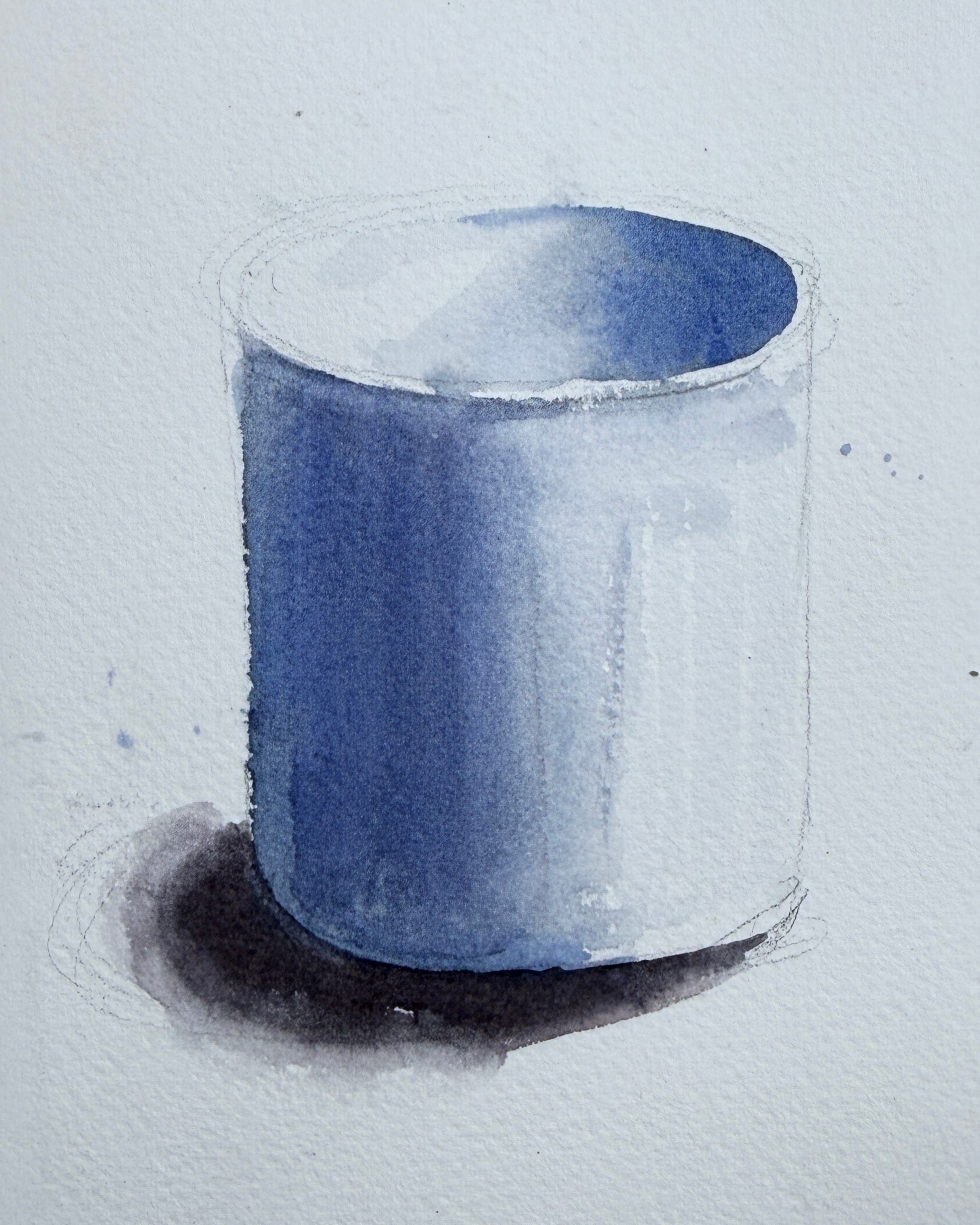
Find a mug or a solid jar. Put it near a window or lamp so you have a clear single light source. You’re not painting the mug in detail — you’re painting the light on it.
Mix a mid-value wash of any single colour (blue, grey, or a warm neutral all work)
Drop your colour in on the shadow side and let it bleed toward the centre, leaving the light side as near-white paper
When dry, add a second, darker pass just on the deepest shadow
Add a shadow shape beneath the mug so it sits on its surface rather than floating
You can leave a thin strip of slightly lighter tone towards the very edge of the shadow side, the reflected light bouncing back off the table.
If you object is hollow (like a mug), also paint the inside shadow
Pay attention to the ellipse at the top and bottom of the cylinder. They’re usually not identical as perspective makes one flatter, and the other one rounder.
Exercise 2: A Lighthouse
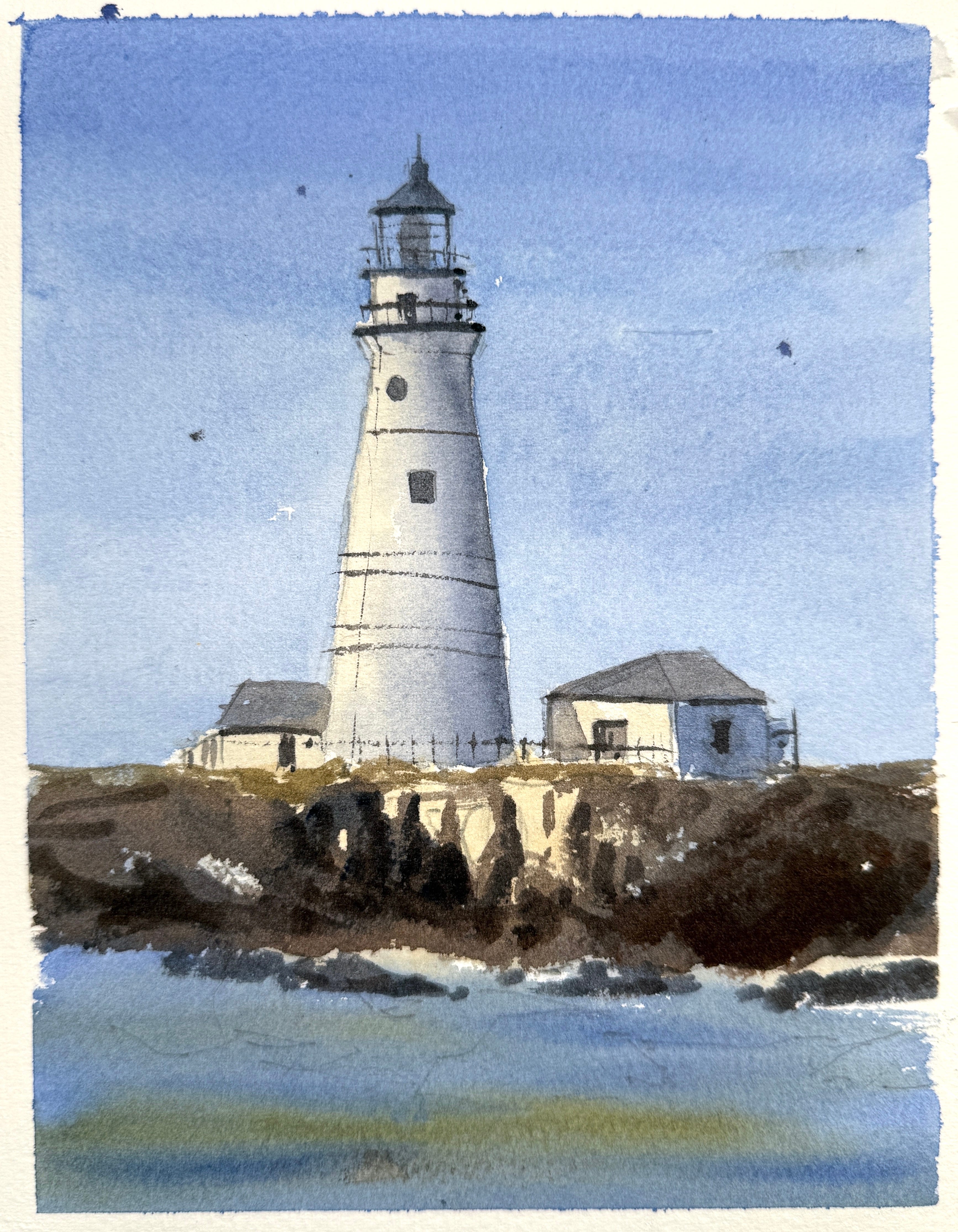
Now we we use this principle and apply it to a lighthouse.
A lighthouse is just a tall cylinder and we can indicate the form and light in the same way.
Sketch a simple lighthouse: a long vertical cylinder with a small lantern cap.
Paint sky and foundation first, loosely, keeping things light. Leave the lighthouse shape white and paint around it
Apply the same curved shadow technique from Exercises 1 and 2 to the tower
Add a cast shadow falling to one side at the base
A few simple marks — rocks, a suggestion of cliff, a distant horizon line — are enough to anchor it
Why
The cylinder is one of the most common forms in the world: mugs, bottles, tree
Painting curved shadows trains you to see gradual value transitions rather than hard lines, which makes everything you paint feel more three-dimensional
Gradients is one of watercolours’ secret weapons. Not just as a big wash in the background, but to give smaller shapes more depth and interest
Painting gradients is trickier than it looks. In the video demos below you can see exactly what I'm doing before you pick up your brush.
“Very helpful and relevant to us beginning watercolor artists! I look forward to your newsletters; thank you!” – Melanie
