
Cut to the Shape
Monochrome sketches to build compositional awareness
A few weeks ago we practiced expressive brush marks. This week, we’re scaling up - a complete scene with a single colour and one brush. This isn’t about careful studies or fine detail. It’s about learning to see shapes and structure, and placing them with intentional marks.
You can use a flat brush, a round, even felt tip pens—what matters is that you commit to just 1 “tool”, and let it do the talking. The aim is to simplify shapes, establish structure, and suggest detail with minimal fuss.
It’s one way to do value studies, but instead of sketching the scene first, we’re observing the lights, mids, and darks of our reference and translating them directly with the brush.
If that sounds difficult, try it anyway—and let go of any expectation about how it should look. This is about having fun with mark-making and building a painting from broad impressions, not precision.
Exercise
Choose a brush and paint a small, simple scene. Your reference should have big shapes and strong values. You’re welcome to follow my examples below
Focus on the silhouette and the big shapes before adding any detail
I often start by painting the darkest elements, leaving the lightest areas as untouched paper
If using a flat brush, use the edge to suggest fences, windows, or trees
Keep everything as direct as possible—think shape, not detail
Examples
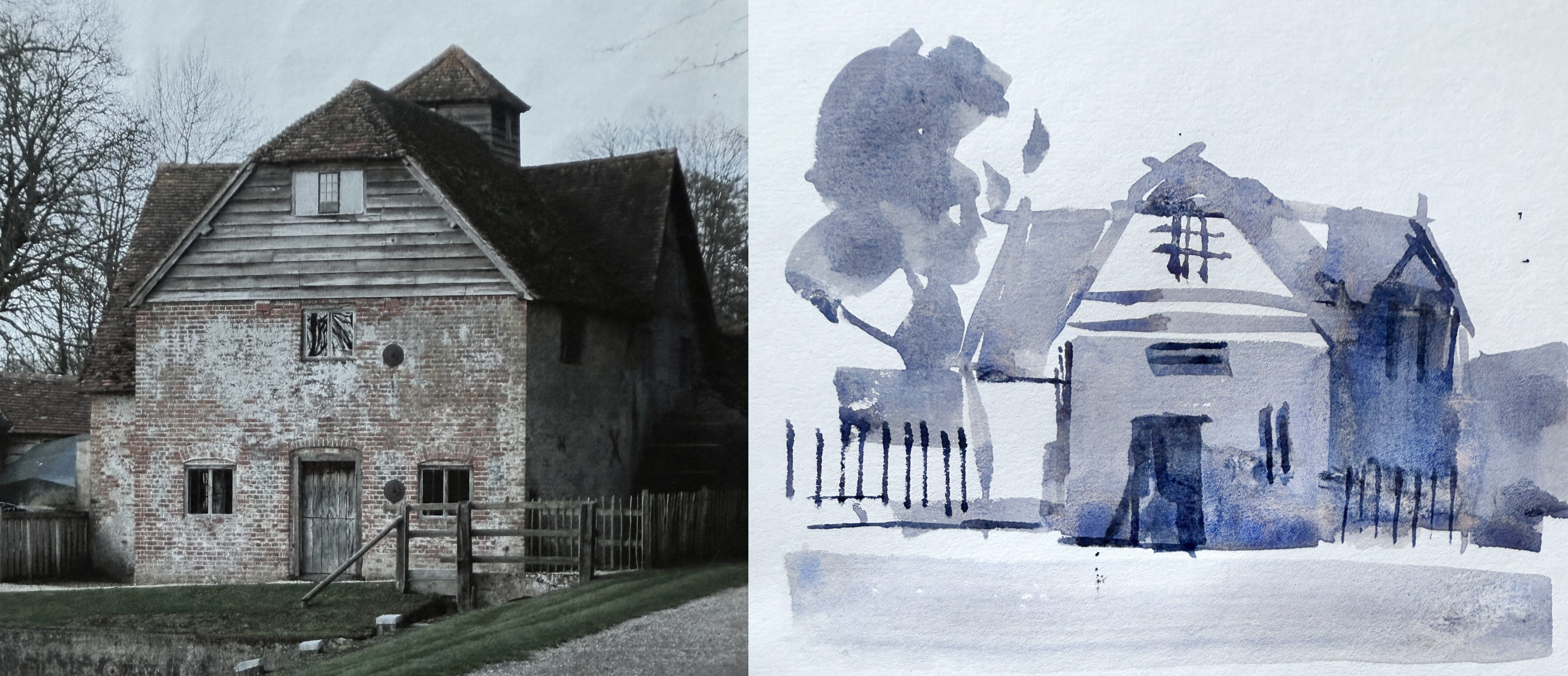
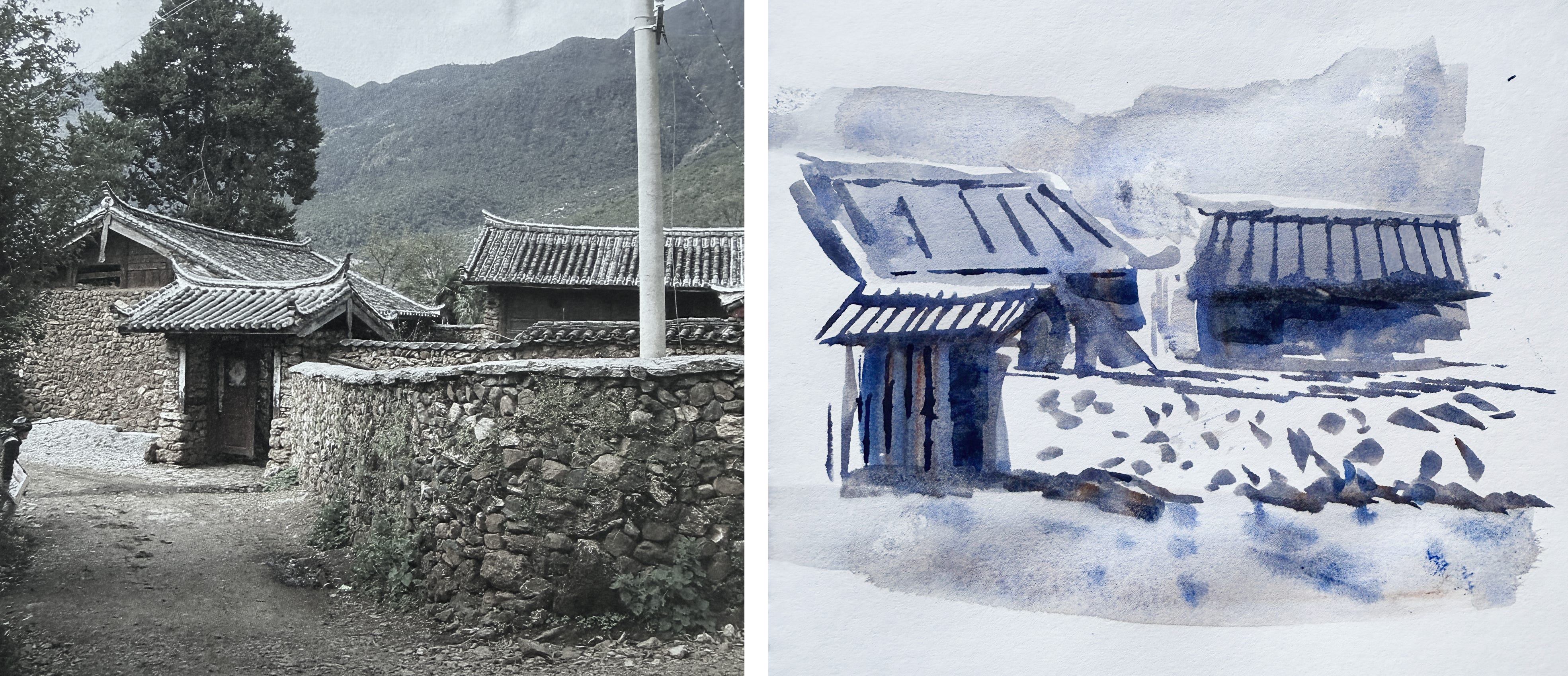
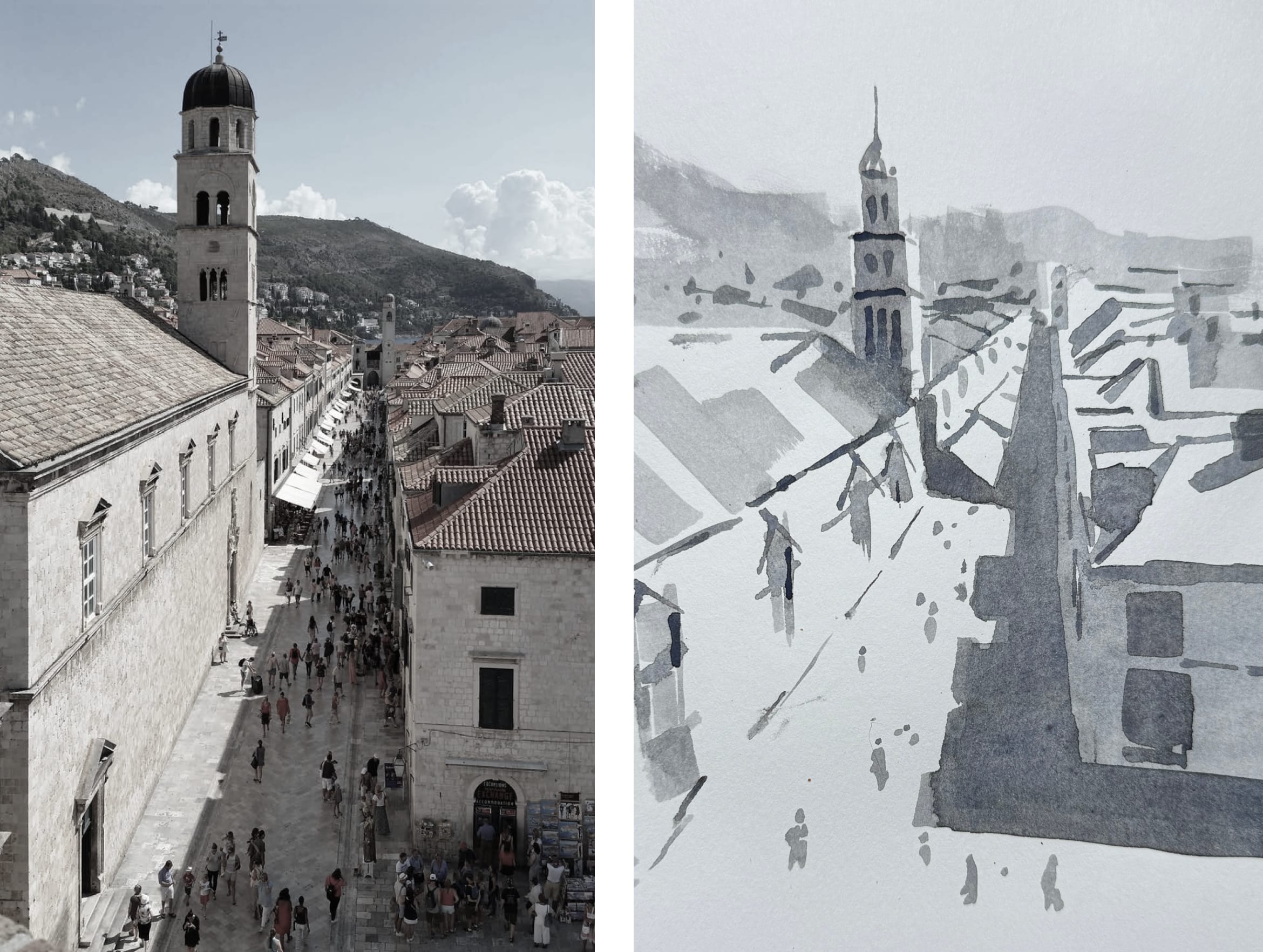
All photos John Haycraft
Why
Forces clarity in your brushwork and shape design
Helps you see subjects as abstract shapes (less scary!)
Reinforces the practice of limited tools and expressive marks
To shaping up,
Patrick
Premium extras (for paid subscribers):
A video demo of another example (San Francisco view)
Master Artist Reference
Extended practice prompt
