
Counterchange
How shifting contrast defines your subject
Last time we talked about starting with darks, but here’s a technique that takes it further: counterchange.
Once you see it, you can’t unsee it, as they say.
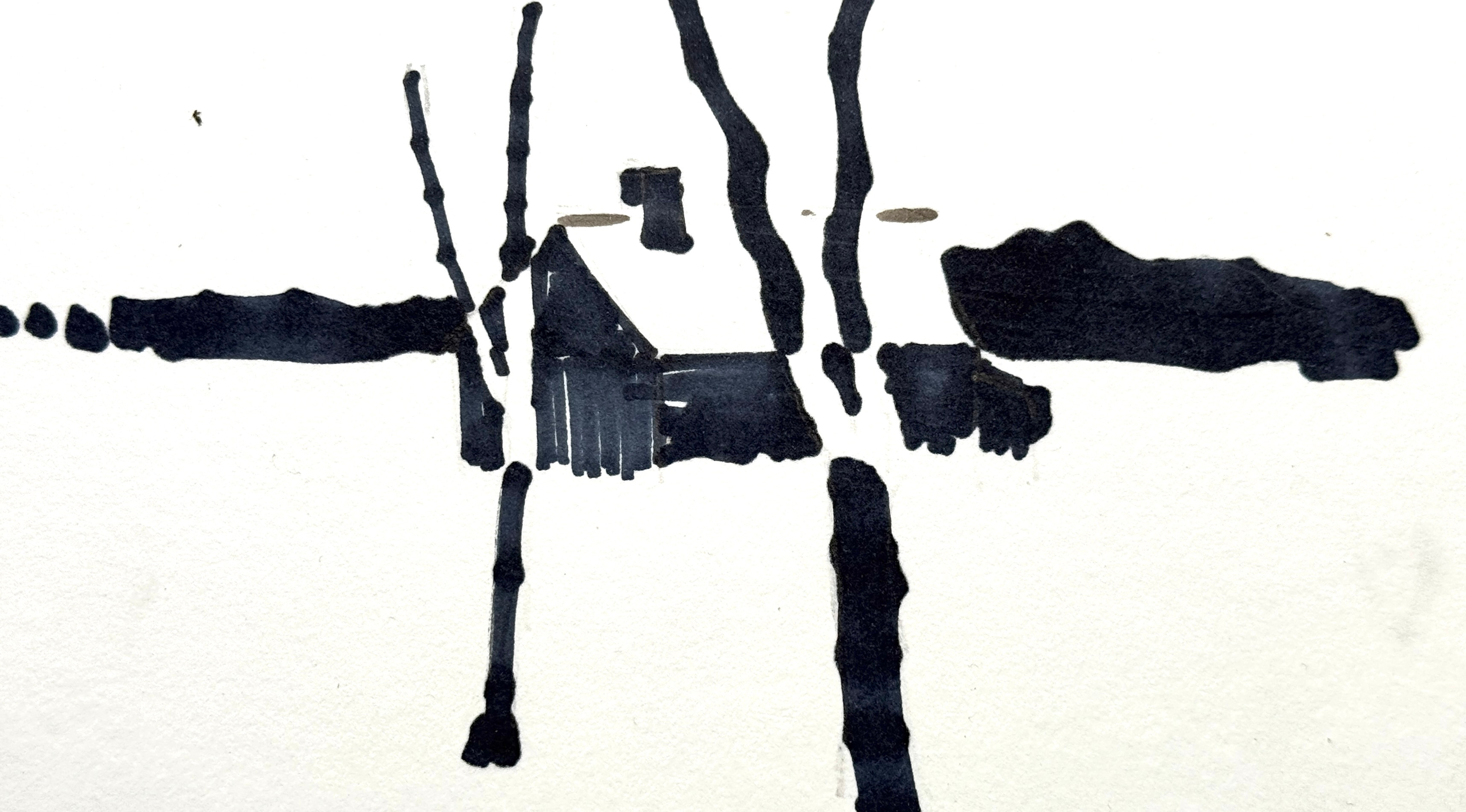
Counterchange means letting an object shift from light against dark to dark against light.
Without counterchange, shapes can look flat and predictable. With it, even a plain tree trunk suddenly feels alive, connected into its surroundings.
When observed in the real world it’s often quite subtle, but we can exaggerate this effect to make more interesting art.
Exercise
Observe: take notice of objects that are overlapping light and dark backgrounds. Picture how you’d paint or draw that using counterchange
Strengthen your understanding by copying the examples below
Create at least one sketch or painting this week using counterchange
A basic diagram of counterchange. A bit like a checkerboard pattern, where an object (like a tree) switches from light to dark depending on its background.
Examples
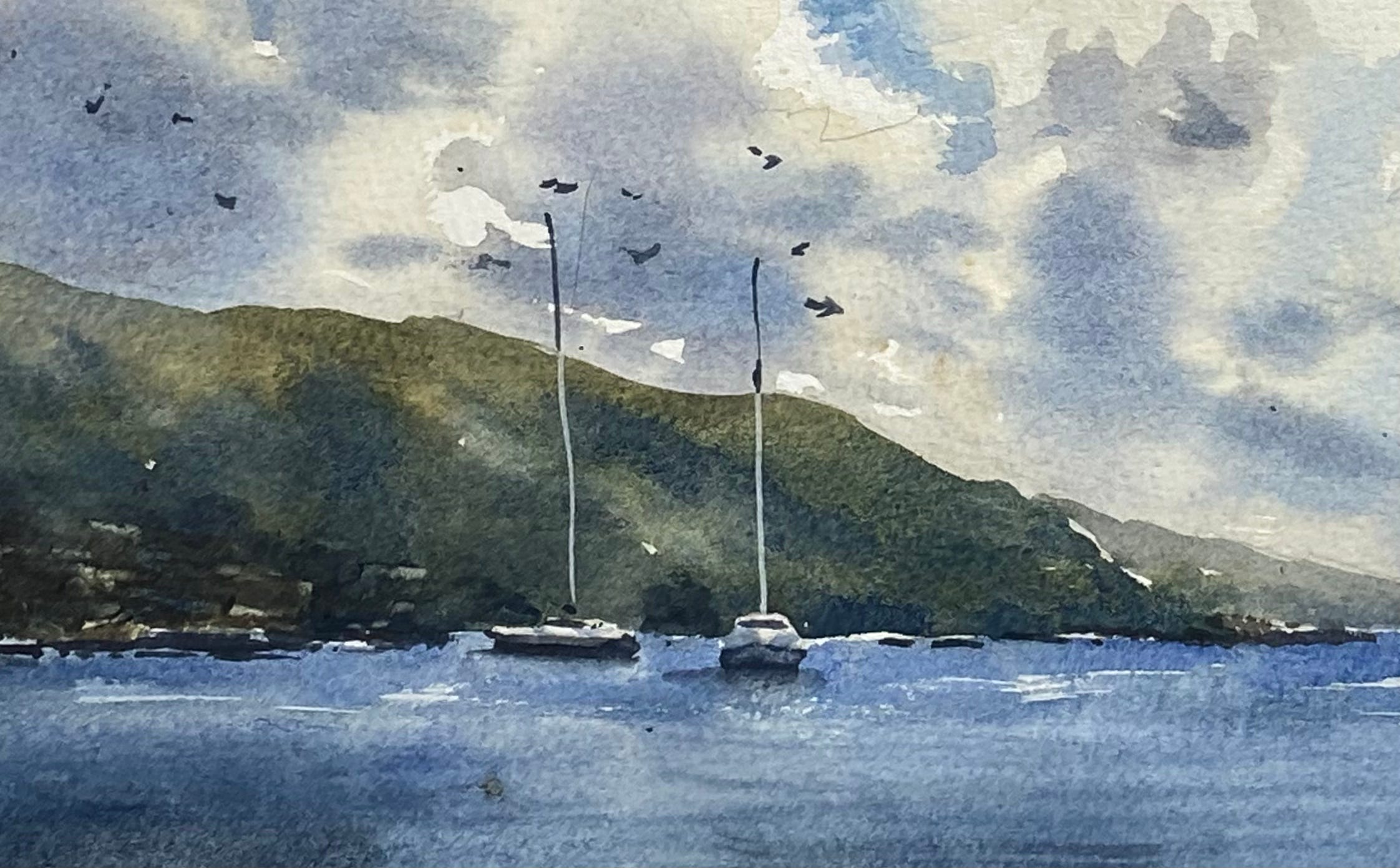
Masts & Poles
A good way to stop masts from disappearing in harbour scenes. The masts are white against the darker hills, then continue as dark lines against the light sky.
Objects
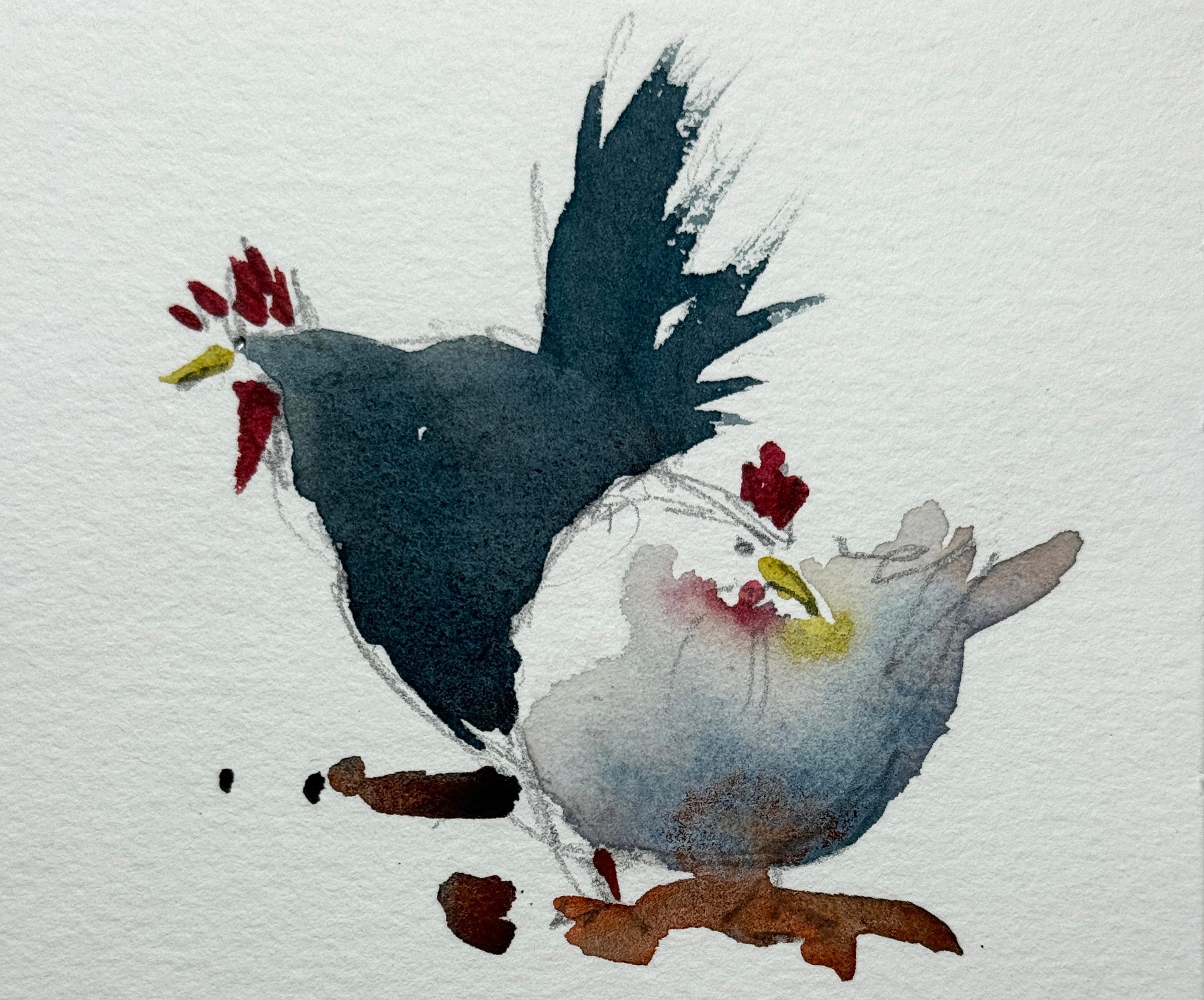
You can also use this technique to create more contrast and interest of overlapping and adjacent objects.
I used counterchange to define the white hen against the dark rooster and white background.
I’ve included the video demo of this example below.
Why
Counterchange is one of the simplest ways to add interest and depth to a painting without adding more detail.
Increases clarity of forms by using contrast
Strengthens composition by giving the eye variety to follow
Adds atmosphere since our eyes expect edges to fade and reappear in changing light.
Keeps paintings lively by breaking up “cookie-cutter” outlines
Keep the change!
Patrick
Next up:
Video demos of the chickens and a bonus street scene
How a Master artist uses this technique in her compelling portraits
Ideas how to practice this further
