
Before the first wash
Design before you paint
I’ve just returned from a week at the Plein Air festival in Canberra. There’s nothing quite like spending a few days outside with fellow (aspiring) artists painting autumn scenes. No distractions, no household chores, no work calls.
But there’s a particular kind of overwhelm when I’m presented with a real landscape. The scene just keeps going in every direction, with infinite possibilities for what to paint. A panorama, a mid-range view, a close-up detail?
If there’s one thing I’d do differently, it’s to spend more time designing my painting before touching the paper. I was too keen to get my brushes to work. I took a photo to capture the light, cropped the view to pick my scene. But I didn’t explore the possibilities enough. The big shapes, the value structure, the focal point.
In hindsight I should have made the big decisions before picking up a brush. A solid plan before the first wash. That’s what this week and next is about.
What happened when I skipped it
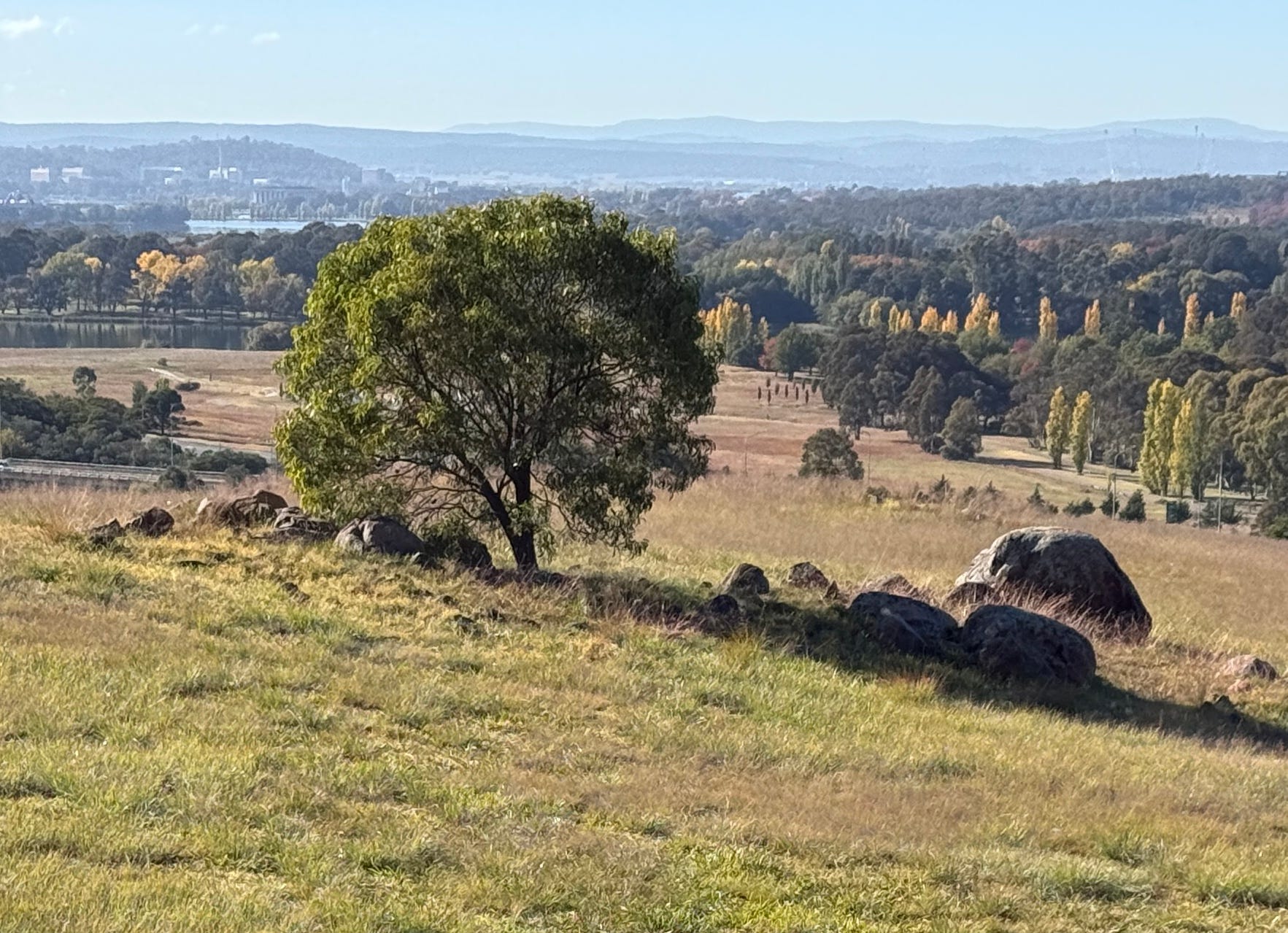
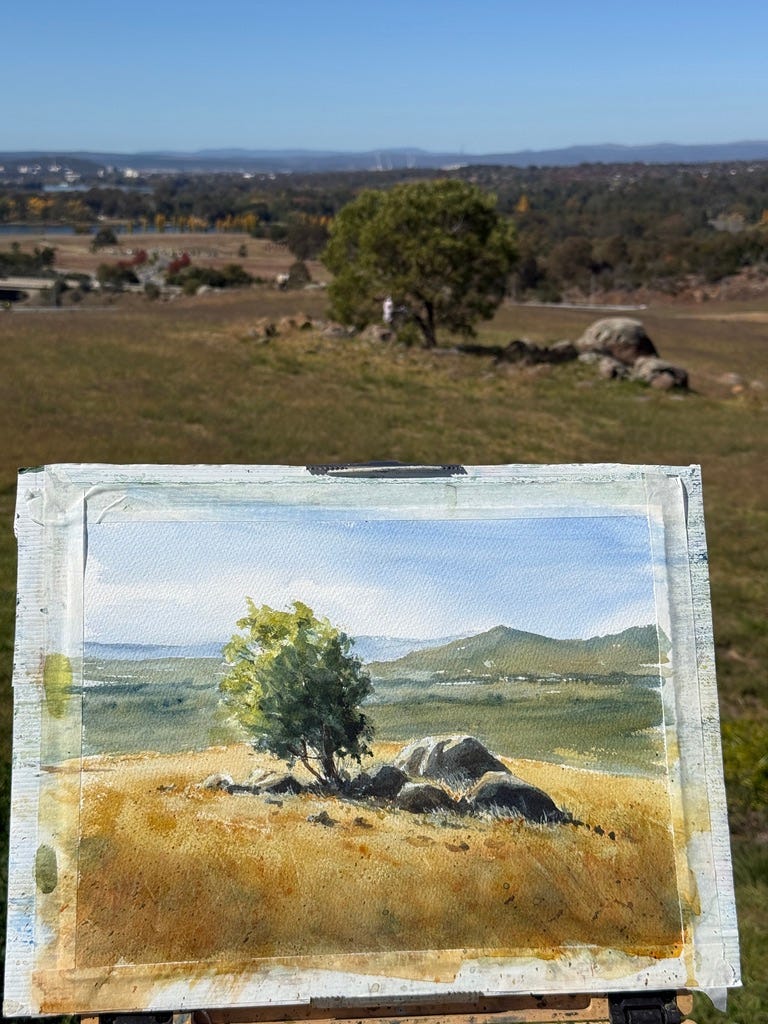
This is a scene I came across during the festival. The strong shadows cast by the morning sun, the soft background, the clear light. I wanted to paint it immediately, so I did.
I painted what was in front of me, with the main subject sitting right in the middle of the paper. No composition planning, no value structure. By the time I was nearly finished the shadows had disappeared and I kept adjusting, chasing something I’d already lost. A thumbnail would have helped me commit to the original idea and stick with it.
Exercise
Use your own reference for this, something you actually want to paint. The decision-making is the exercise, so copying my example won’t give you the same benefit.
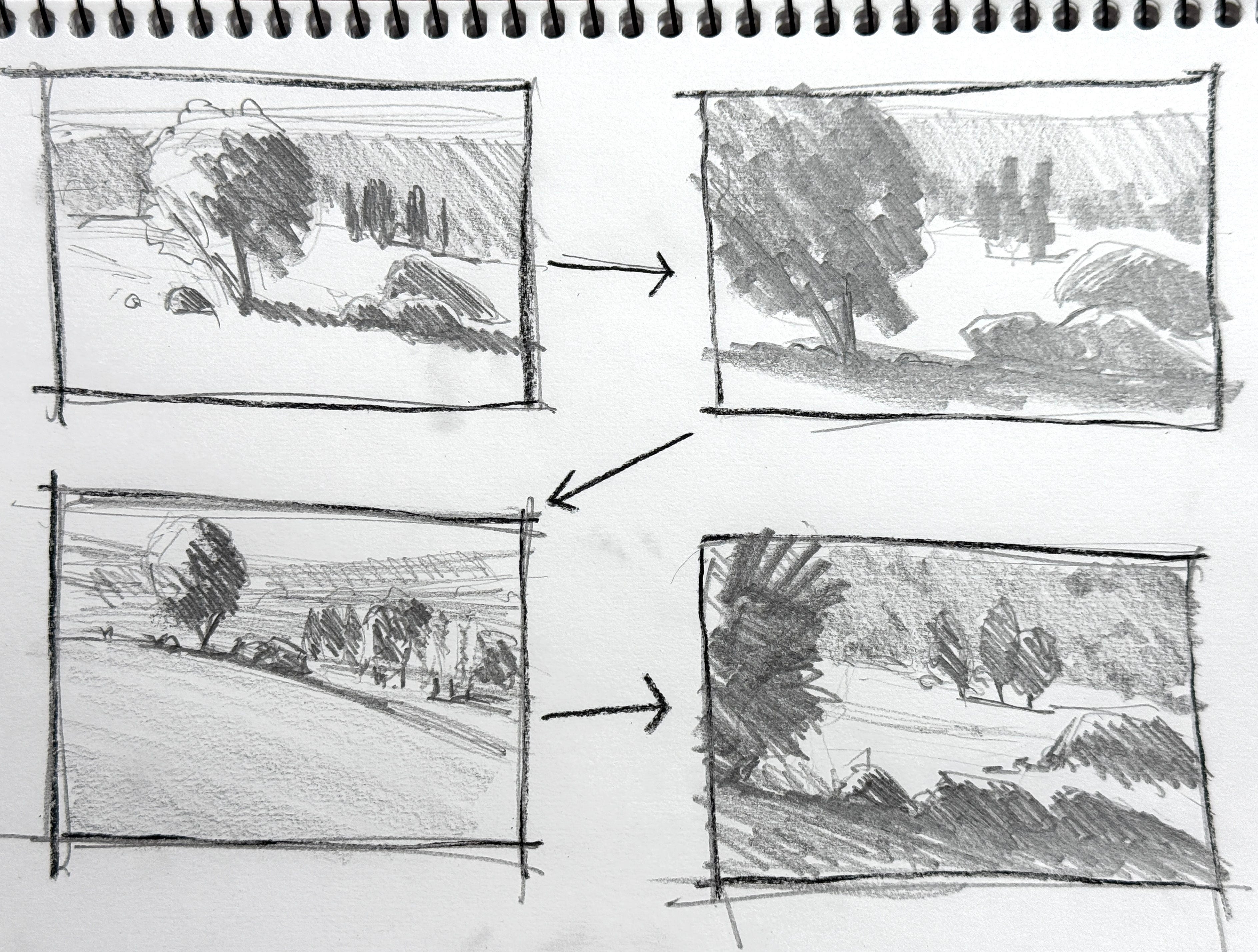
On an A4 or letter-sized page in your sketchbook, draw 4 frames in the same proportion as your paper
Start with the obvious idea. The one that made you want to paint this scene in the first place. Loosely sketch the main shapes and use shading to separate lights, mid-values and darks
For options 2 and 3, zoom in and zoom out. Shift the focal point. What if a large foreground creates a more interesting shape? What if you cropped out the awkward element that’s been bothering you?
For the last one, push further or improve on your favourite of the three. In my example I liked the zoomed-in version but made it more dramatic by using the edge of the tree as a framing device
Next week we’re taking our favourite thumbnail and create a series of small studies from it.
Why
Separates the design decisions from the painting decisions, so you’re not making both at once
Four variations forces you past the first obvious idea, which is rarely the strongest one
Committing your value structure to paper before you paint means you have something to refer back to when the light changes or the scene gets confusing
A five-minute sketch done badly still tells you more about your composition than diving straight in
Next up for premium subscribers:
Video demo of the exercise talking through my thought process
Master artist spotlight - one of the best teachers of composition
Advanced practice ideas
You’re so good at making things easier to see and understand in watercolor! - Christine K
